'Rice Crisis' Experienced by Japan, 50-Year Reduction Policy Withdrawn "Increasing Rice Production"
- Input
- 2025-08-05 10:04:23
- Updated
- 2025-08-05 10:04:23
Complete overhaul of production adjustment system centered on reduction as rice prices soar
2024 rice supply shortage of 320,000 tons, cumulative shortage of 980,000 tons over 3 years
2024 rice supply shortage of 320,000 tons, cumulative shortage of 980,000 tons over 3 years
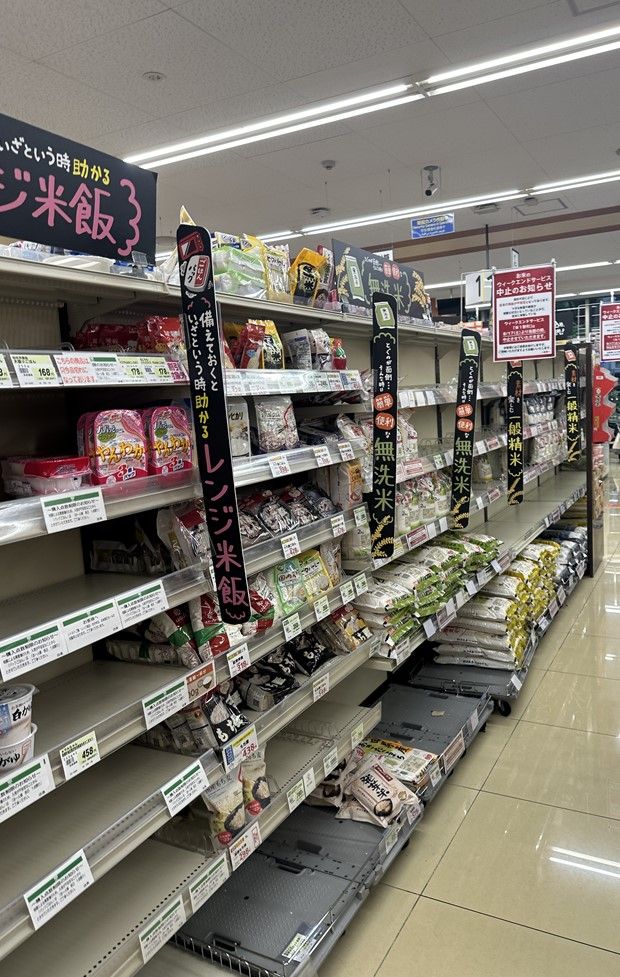
【Tokyo=Kim Kyung-min, correspondent】 The Japanese government is withdrawing its long-standing reduction policy to maintain rice prices and shifting its policy direction towards increasing production. This is a fundamental measure introduced by the government after experiencing the 'Reiwa (令和, Japan's current era name) rice crisis'.
The government will hold a meeting of relevant ministers on rice policy at the Prime Minister's Office on the 5th, where Prime Minister Ishiba Shigeru is expected to officially announce "a shift towards increasing production." At a meeting held last month, he stated, "We will promote a new rice policy so that motivated producers can confidently increase production." This time, it has been concretized.
In this meeting, Prime Minister Ishiba assessed that the existing reduction-inducing policy was essentially a strong intention of "not producing rice" ahead of the scheduled review of the paddy (water field) policy in 2027. He announced plans to change support policies to reduce abandoned farmland amid aging and population decline and to pass the farmland on to the next generation.
The Ministry of Agriculture, Forestry and Fisheries plans to finalize the framework of the new paddy policy by next summer. Currently, there is a system that provides subsidies to farms that switch from staple rice to feed rice, wheat, soybeans, etc., so the structure of adjusting staple rice production according to demand forecasts continues. This has led to criticism as a 'de facto reduction policy'. There is a growing voice within the Liberal Democratic Party and the Ministry of Agriculture, Forestry and Fisheries that such a system should be reformed and individual support measures should be prepared for each item such as feed rice, wheat, soybeans, etc.
The sharp rise in rice prices has directly burdened consumers. This year's demand for staple rice is 7.11 million tons, exceeding the production volume (6.79 million tons) by 320,000 tons. When combined with production from 2021 to 2024, a total supply shortage of 980,000 tons has occurred. The government officially confirmed that the supply-demand imbalance was the main factor in the price surge. Shinjiro Koizumi, Minister of Agriculture, Forestry and Fisheries, said, "Rather than highlighting differences, we will find commonalities and advance policies," conscious of the political situation with a divided parliament.
In addition, Prime Minister Ishiba plans to promote the spread of eco-friendly cultivation methods that use less water, especially in response to rapid climate change.
[email protected] Kim Kyung-min, reporter