Japan Opens Path for First Warship Export... Australian Next-Generation Frigates to be Japanese-Made
- Input
- 2025-08-05 09:53:51
- Updated
- 2025-08-05 09:53:51
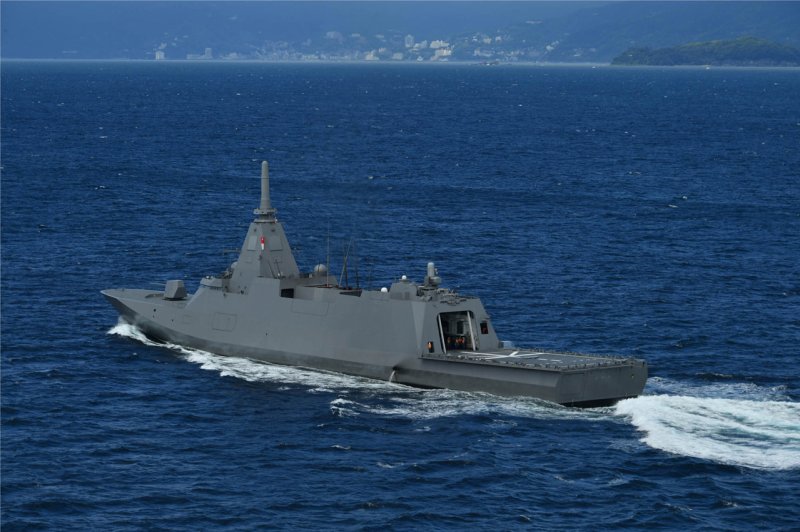
【Tokyo=Kim Kyung-min Correspondent】 In the project for the next-generation frigate (escort ship) that the Australian Navy has been considering, the plan proposed by the Japanese government has been virtually finalized. It is the first time that a Japanese warship will be exported overseas. It is expected to signal the expansion of defense industry exports. Recently, as South Korea and the United States signed a shipbuilding cooperation project 'MASGA' (Make American Shipbuilding Great Again), Japan is also seen as moving to expand defense industry exports and strengthen ties with U.S. allies.
According to Nihon Keizai Shimbun (Nikkei) on the 5th, the Australian government confirmed the policy to adopt the ship model proposed by Japan at the National Security Cabinet Meeting (NSC) held on the 4th, which was composed of the Prime Minister and some ministers.
The specific price and procurement conditions will be coordinated through negotiations with Japan's Mitsubishi Heavy Industries, which is the main construction entity, and the contract is aimed to be concluded within the year. Australia hopes to receive the first ship by 2029.
Australia plans to invest 11.1 billion Australian dollars (about 10 trillion won) to replace 11 old escort ships with new ones. Of the 11 ships, 3 will be imported, and the remaining 8 will be built at the Henderson shipyard near Perth in southwestern Australia. Japan proposed a model that is an improved version of the next-generation 'Mogami-class' frigate of the Maritime Self-Defense Force.
Japan has no previous record of exporting warships, and there have been criticisms that its products are more than 20% more expensive than German ones. However, Japan persuaded the Australian side by emphasizing high technology such as stealth performance and efficiency, with the number of crew members reduced to around 90. In particular, it is reported that Japan emphasized, "We can reduce labor costs by about 30% over the entire operation period."
The most important factor for Australia was the delivery time. Japan has the capability to build more than two ships per year, and in an interview with an Australian broadcaster in January, the then Chief of Staff of the Self-Defense Forces stated, "If selected, we will prioritize delivery to Australia."
As China strengthens its maritime presence in the Indo-Pacific region, security cooperation between Japan and Australia is gradually strengthening. If both countries operate the same ships, interoperability can be enhanced in terms of maintenance bases and parts sharing. For Japan, it is expected to deepen cooperative relations on a strategic level beyond simple arms exports in the Indo-Pacific strategy.
In addition, Japan is also known to be pursuing the export of frigates to Indonesia and the Philippines. Furthermore, British Defense Secretary John Healey is coordinating a visit to Japan to meet with Defense Minister Nakatani Gen around the 28th of this month. Both sides are expected to confirm the existing policy of deploying next-generation fighters by 2035.
[email protected] Kim Kyung-min Reporter