Yellow Envelope Act and Commercial Act to August National Assembly.. Re-discussion on Stock Transfer Tax and Other Tax Reforms
- Input
- 2025-08-04 16:02:45
- Updated
- 2025-08-04 16:02:45
Jeong Cheong-rae's Media Reform Will Delays Yellow Envelope Act and Commercial Act
After passing the Broadcasting Act in the July National Assembly due to opposition filibuster
Yellow Envelope Act and others to be voted on after filibuster from the 21st
Tax reform, which sparked public debate due to stock market crash, will be decided after reflecting public opinion and party-government consultation
Attention on whether dividend income and corporate tax will be adjusted besides stock transfer tax
After passing the Broadcasting Act in the July National Assembly due to opposition filibuster
Yellow Envelope Act and others to be voted on after filibuster from the 21st
Tax reform, which sparked public debate due to stock market crash, will be decided after reflecting public opinion and party-government consultation
Attention on whether dividend income and corporate tax will be adjusted besides stock transfer tax
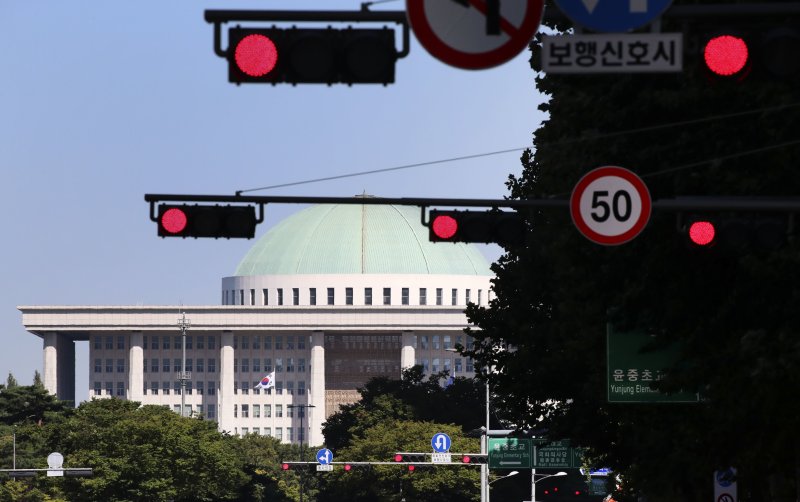
On the 4th, the National Assembly processed non-contentious bills in the plenary session and first put the broadcasting law amendment among the contentious bills to a vote, while the People Power Party launched a filibuster (an unlimited debate under the National Assembly Act to obstruct proceedings).
Under the National Assembly Act, a filibuster can be terminated with the consent of more than 180 seats, but voting is possible 24 hours later. The Democratic Party will demand the end of the filibuster on the 5th, after which the vote will take place. The broadcasting law amendment is likely to pass on the last day of the July extraordinary session on the 5th. Once the July session ends, the remaining contentious bills, including the Yellow Envelope Act and the second amendment to the Commercial Act, will move to the August extraordinary session. The agreed date for the plenary session is the 21st, and due to lawmakers' vacations and overseas trips, it is difficult to bring the date forward. The business community thus gains about two weeks to persuade the Democratic Party.
The Yellow Envelope Act focuses on limiting claims for damages during strikes and granting primary negotiation rights to subcontracted workers. The second amendment to the Commercial Act includes the introduction of a cumulative voting system and the expansion of separate election of audit committee members. All of these increase the burden on companies.
However, the reason the Democratic Party did not prioritize the Yellow Envelope Act as the first listed bill is analyzed to be due to the leadership's perception that media reform is more urgent than the concerns of the business community and opposition parties' backlash. It is reported that Leader Jeong Cheong-rae pushed forward with the promise of completing media reform before Chuseok. Therefore, even if the plenary session is delayed, it is uncertain whether the last-minute persuasion by the business community will succeed.
The government and ruling party have decided to prepare alternatives for the lowering of the major shareholder standard for stock transfer tax, which caused a stir in the stock market. As there is an open debate on pros and cons even within the party, Leader Jeong has instructed to reflect public opinion and organize a stance. Some suggest a compromise to adjust the major shareholder standard to around 30 billion won.
Democratic Party's young lawmakers such as Jeon Yong-gi and Lee So-young appealed to withdraw the expansion of the stock transfer tax scope and further push for separate taxation on dividend income, which faced internal opposition. They emphasized that 13 lawmakers publicly opposed it and that a national petition against it reached 120,000 signatures.
The Democratic Party plans to first prepare multiple tax reform alternatives at the policy committee level and finalize them through party-government consultations. Attention is on whether separate taxation on dividend income, a 25% corporate tax, and a 0.2% securities transaction tax will be adjusted.
uknow@fnnews.com Kim Yun-ho Kim Hyung-gu Reporter