Education, Safety, Livelihood 'Pass', Housing, Social Integration 'Needs Improvement'... Seoul City Announces 'Vulnerable Companion Index'
- Input
- 2025-08-04 10:00:00
- Updated
- 2025-08-04 10:00:00
Vulnerable Companion Index up 17.7% YoY... Rising for Two Consecutive Years
Medical and Health Index Up... Proactive Management of Dementia and Mental Health
Safety and Livelihood Sectors Also Rise... Continued Strengthening of Vulnerable Companionship
Slight Decline in Housing and Social Integration... Policy Improvements Underway
Medical and Health Index Up... Proactive Management of Dementia and Mental Health
Safety and Livelihood Sectors Also Rise... Continued Strengthening of Vulnerable Companionship
Slight Decline in Housing and Social Integration... Policy Improvements Underway
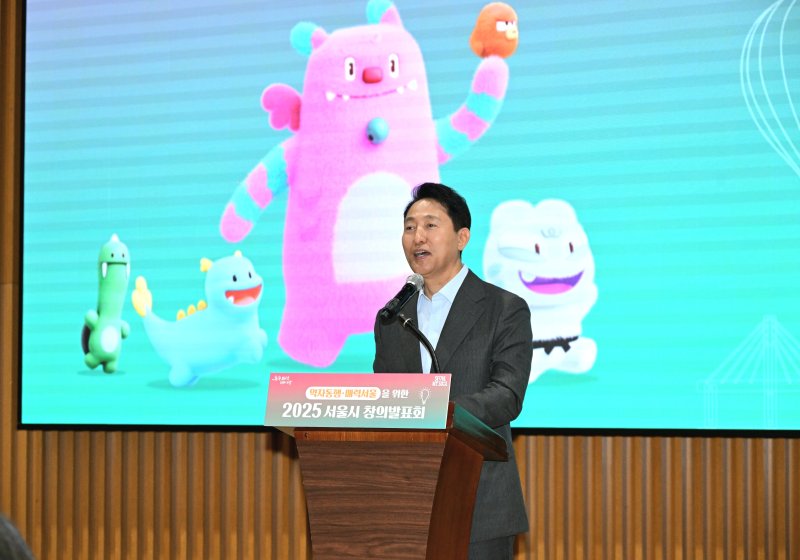
[Financial News] The second report card of 'Companionship with the Vulnerable', a core philosophy of the 8th term of Seoul City administration, has been released. Based on 2022, the comprehensive index has been on the rise for two consecutive years. Among the six major areas, sectors closely related to citizens' daily lives, such as medical and health, safety, livelihood and care, and education and culture, showed an upward trend. However, 'housing', which showed a steep rise last year, and 'social integration', which remained at a somewhat low level last year, slightly declined.
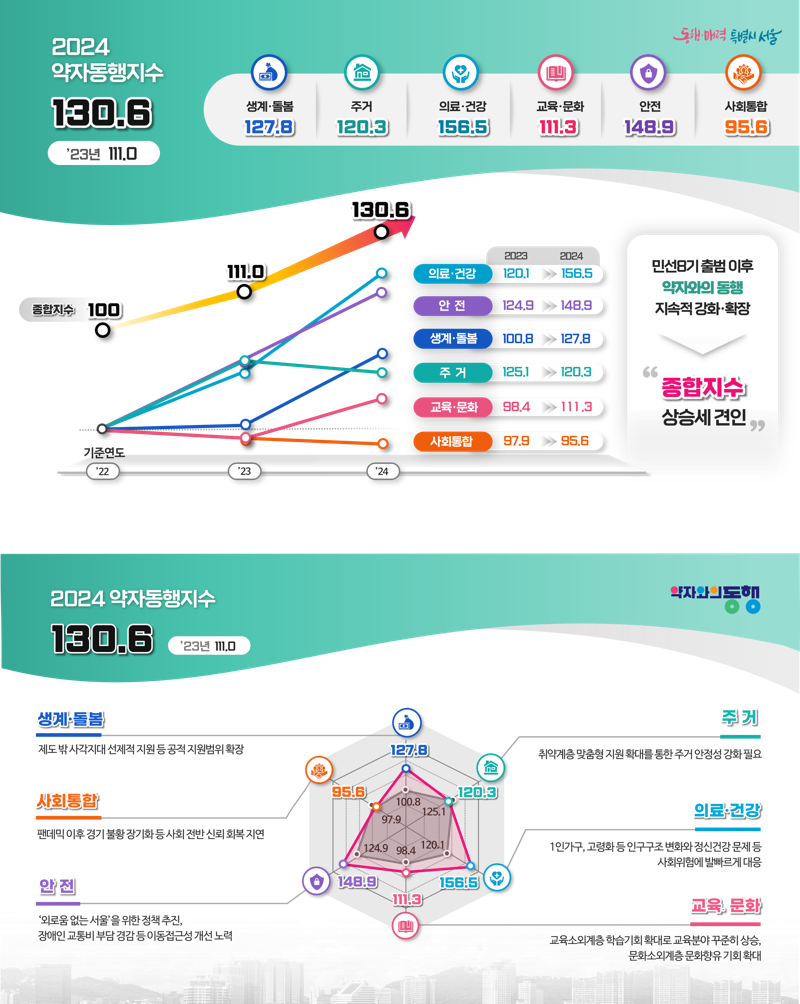
According to Seoul City on the 4th, last year's Vulnerable Companion Index was 130.6, an increase of 17.7% from the first evaluation of 111.0 the previous year. Compared to the base year of 2022 (100), it is a 30.6% increase, marking a two-year upward trend.
Among the six fields, the index that rose the most was 'medical and health', recording 156.5 in 2024 from 120.1 in 2023. It reflects responses to social risks such as changes in population structure due to aging, dementia, and mental health issues.
The 'dementia patient case management rate' increased from 19.30% to 20.65%. The city supports comprehensive response and management from dementia prevention to case management and tailored support, centered on the Metropolitan Dementia Center and district dementia relief centers. The scale of 'mental health support for children, adolescents, and youth' through proactive interventions such as psychological tests and diagnoses and professional counseling also increased by more than 30%, from 17,331 to 22,721.
The city evaluated, "As a result of various policies working organically," and "while focusing on eliminating medical gaps and blind spots, customized support considering life cycle characteristics and vulnerable factors has been further strengthened."
The second highest index, 'safety', rose from 124.9 to 148.9 as 6 out of 9 indicators increased. In particular, the 'discovery and support scale for isolated and reclusive youth' increased by about 60% compared to the previous year, showing the most significant improvement in this area.
However, among the evaluation factors, 'satisfaction with the use of transportation for transportation-disadvantaged people' showed a slight decrease compared to the previous year. The city is expanding the related budget this year to improve the convenience of movement for transportation-disadvantaged people and is promoting improvements such as expanding autonomous driving buses for the transportation-disadvantaged.
'Livelihood and care' also improved 9 out of 12 indicators, rising from 100.8 to 127.8. The 'welfare service linkage for family care youth' increased about threefold from 122 to 431, and the 'discovery and support scale for crisis small business owners' also increased by more than 30%, from 1,021 cases to 1,346.
'Education and culture', which showed a decline last year, recorded 111.3, surpassing 100 for the first time. All 8 detailed indicators improved, showing a clear rebound. Major policy achievements such as Seoul Run and cultural activity support for socially disadvantaged people received positive evaluations.
Conversely, 'housing', which showed a significant rise in the previous evaluation, had improvements in major indicators such as the 'expansion of support scale for housing improvement for vulnerable groups', but some indicators declined, resulting in a slight decrease from 125.1 to 120.3.
The 'scale of housing environment improvement for vulnerable households' decreased by about 20% from 2,694 to 2,157 compared to the previous year, as the budget temporarily increased in 2023 for environmental improvements of flood-damaged homes.
The city plans to continue strengthening policies based on 'customized housing services'. This includes expanding the target of support for vulnerable housing groups, improving housing quality and living convenience, and providing systematic support throughout the entire process from relocation to settlement.
Due to the impact of decreased social trust spread after COVID-19, some indicators such as 'volunteer participation rate of Seoul citizens' and 'donation experience rate' declined, and the 'social integration' index has been on a downward trend for two consecutive years. The city explained, "Factors such as deepening individualism, disconnection between neighbors, and weakening of community foundations worked complexly," but added, "However, the decline in the indicators of volunteer participation and donation experience has been reduced compared to the previous year."
Jung Sang-hoon, Director of Planning and Coordination at Seoul City, said, "The Vulnerable Companion Index is a standard that suggests the direction Seoul City administration should take, beyond just being a slogan, by changing citizens' daily lives," and added, "We will continue to expand changes in daily life that citizens can feel and meticulously examine invisible blind spots to continue 'companionship with the vulnerable' without change."
chlee1@fnnews.com Lee Chang-hoon Reporter