Trump's Tariff '15% Rule', Designed by Japan
- Input
- 2025-08-04 09:32:08
- Updated
- 2025-08-04 09:32:08
"The US requested Japan for a 'globally applicable tariff formula'"
Japan designed a quantitative formula reflecting local production, employment contribution, etc.
The US set a '15%' global tariff standard based on this
Japan designed a quantitative formula reflecting local production, employment contribution, etc.
The US set a '15%' global tariff standard based on this
【Tokyo=Kim Kyung-min, Special Correspondent】 The '15% tariff rate' used by the US as a benchmark in tariff negotiations with major countries worldwide was a structure proposed and designed by Japan, reported Nihon Keizai Shimbun (Nikkei) on the 4th.
According to Nikkei, during the negotiation process, the US requested Japan to "propose a globally applicable tariff formula," and Japan submitted a calculation model reflecting quantitative criteria such as local production volume, parts procurement rate, and employment contribution.
This was a request reflecting the US's realistic concern that it would be difficult to lower tariffs only for Japan on specific items. Eventually, this formula became the US's global negotiation standard, and a 15% tariff rate was applied to Japan as well.
The agreement was reached without explicit documentation, but it later emerged that Japan was the 'unofficial designer' who exercised leadership in the tariff rate decision method and formula structure.
The negotiations initially started with intense pressure from the US. In the first negotiation that began on April 16, US ministers shouted at the Japanese delegation, "Don't you intend to lower tariffs?" and "Don't you understand what the President said?"
However, Japan turned the direction by proposing a tariff calculation formula based on quantitative criteria and expanding large-scale investments in the US, arguing that lowering tariffs themselves was practically difficult. In fact, applying this formula could theoretically reduce the 25% tariff imposed on Japanese cars to a maximum of 8%, but it was ultimately compromised at 15%.
This negotiation strategy was led by Prime Minister Shigeru Ishiba from the start. Under the policy that "real benefits should be secured through investment and structural design rather than tariff reductions with significant legal constraints," Ishiba appointed Akazawa Ryosei as the chief negotiation partner.
Akazawa visited Washington almost weekly, holding successive meetings with Treasury Secretary Scott Besant and Commerce Secretary Howard Lutnick. His frequent visits, to the point where the US side laughed at his remark "I'll come again next week," were evaluated as being effective in building trust in the US.
In particular, Commerce Secretary Lutnick was the key channel who focused on Japan's proposal and directly reported to President Donald Trump. Nikkei reported, "The total of 15 consultations (about 19 hours) between Lutnick and Akazawa formed the basis for Trump's final acceptance decision."
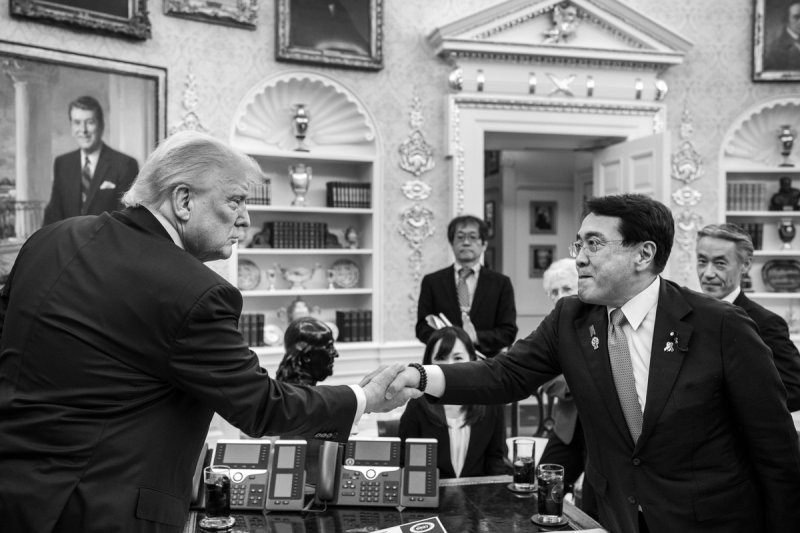
At the end of the negotiations, Akazawa visited Lutnick's residence to finalize the last adjustments, and on July 22, a direct meeting with President Trump was realized at the White House. At this meeting, Japan presented a plan for a total of $550 billion (about 760 trillion won) in US investments and persuaded the US side by conceding profit distribution from 1:1 to 1:9. Trump extended a handshake, saying, "This is the deal," and immediately after the negotiation was concluded, he praised it on his social media (SNS) as "the biggest deal ever."
Akazawa recalled, "It was a negotiation that passed through the eye of a needle." However, it is pointed out that the US-Japan agreement was made without documentation, leaving room for interpretation differences, and the swift negotiation concluded in three months carries the potential for future conflicts.
km@fnnews.com Kim Kyung-min Reporter