Japanese Stock Market Stumbles Due to U.S. Employment Data Shock, "Possibility of Breaking Below 35,000"
- Input
- 2025-08-04 08:53:55
- Updated
- 2025-08-04 08:53:55
Optimism Shaken by Weak U.S. Employment Data in July
If PER Falls to 15 Times, Nikkei Expected at 38,000
U.S.-China Trade Friction Burdens Manufacturing Performance
Despite Strong Performance, Stocks Plunge for Hitachi and Advantest
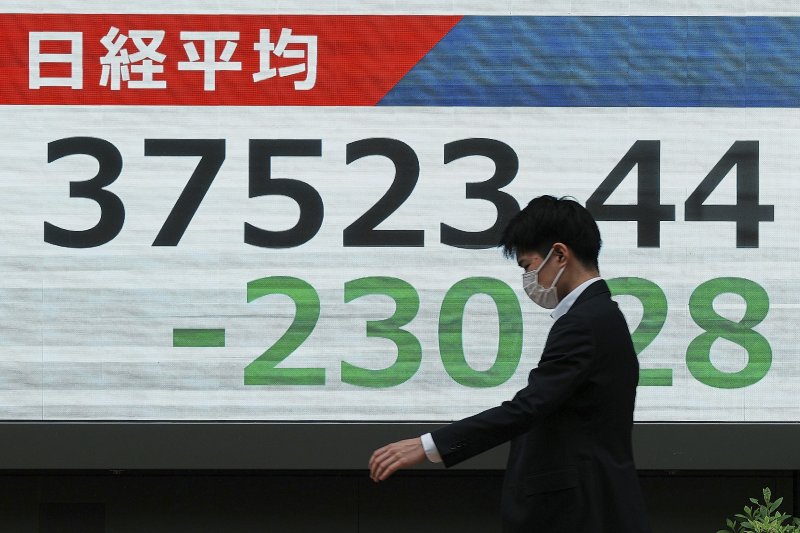
【Tokyo=Kim Kyung-min Correspondent】 The Japanese stock market is entering a correction phase, reported Nihon Keizai Shimbun (Nikkei) on the 4th.
Nikkei reported that "the U.S. July employment data released on the 1st suggests an economic slowdown, creating cracks in the optimism based on the robustness of the U.S. economy." Investors who expected stock price increases after the U.S.-Japan tariff agreement are revising their strategies, and the Nikkei index is expected to fall to the 38,000 yen range. The Nikkei index, which surpassed the 42,000 mark after the U.S.-Japan tariff negotiations were concluded last month on the 24th, is currently pausing below the 41,000 mark.
The increase in U.S. employment in July fell short of market expectations, and the figures for May and June were also revised down to a total of 250,000. Ide Shingo, a researcher at Nissei Basic Research Institute, said, "It was an opportunity to put a brake on market participants' optimism."
Despite the tariff burden, the reason the Japanese stock market maintained its peak was the robustness of the U.S. economy. This employment data shook that premise, spreading risk aversion sentiment throughout the market.
Yamaguchi Masahiro, a manager at SMBC Trust Bank, said, "Now the market will consider how the U.S. economic slowdown will affect corporate performance," mentioning the lower limit of the Nikkei average at 36,000 yen.
The expected net profit for the Nikkei 225 constituent stocks in 2025 is estimated to decrease by 1.5% compared to the previous year. The price-earnings ratio (PER) is 16 times as of the 1st, higher than the 10-year average of 15 times. If the PER falls to the average level, the index could drop to the 38,000 yen range, and if it falls conservatively to 14 times, it could drop below 35,000 yen.
Despite positive performance, stock reactions were lukewarm. Advantest's stock stagnated despite upward performance revisions, and Hitachi's stock plunged by over 9% despite meeting expectations.
However, pessimism is not all-encompassing. Expectations are growing that the slowdown in U.S. employment will lead to interest rate cuts. The probability of a rate cut by the U.S. Federal Reserve in September has jumped to 80%. Lower interest rates could reduce downward pressure on the U.S. economy and positively affect investment sentiment recovery.
This week's earnings announcements by Japanese companies are also expected to influence market trends. Major companies such as Mitsubishi UFJ, Sony, and Toyota will release their April-June results in succession. Nikkei reported, "As it is the first earnings season after the tariff agreement, attention is focused on management's economic perception and guidance."
km@fnnews.com Kim Kyung-min Reporter