[fn Editorial] Tax and Commercial Law Market Instability, Ignoring It May Lead to Backlash
- Input
- 2025-08-03 19:11:33
- Updated
- 2025-08-03 19:11:33
Criticism within the ruling party on major shareholder criteria
Concerns about distortion of growth structure due to commercial law amendment
Concerns about distortion of growth structure due to commercial law amendment
The government's tariff negotiations with the US have passed a major hurdle, but anxiety remains. There are still many unclear points regarding the details and the outlook for US investment funds. In a situation where external uncertainties persist, the government's reckless tax increase and additional commercial law amendments are factors that cannot but exacerbate market anxiety. The domestic stock market's nearly 4% plunge on the 1st was due to these reasons. The government and ruling party leadership must remember that if they take the concerns of the field lightly, a bigger backlash may occur.
Above all, attention is drawn to the growing criticism within the ruling party regarding the government's push for tax increases. The tax reform plan announced by the government this year is retrogressive in many ways. The government plan includes raising the corporate tax lowered by the previous government, and strengthening the major shareholder criteria for stock capital gains tax from 5 billion won to 1 billion won. The separate taxation of dividend income falls short of expectations, and the promised easing of inheritance tax before the election has been postponed as a mid-to-long-term task.
From a corporate perspective, it is a dire situation where the Trump tariffs and government tax increases overlap. The disappointment of individual investors who expected a re-evaluation of the domestic stock market is indescribable. Strengthening the major shareholder capital gains tax criteria does not directly apply to individual investors. However, there have been constant concerns that if the criteria are strengthened, major shareholders will sell stocks en masse at the end of the year to avoid taxation, increasing market volatility.
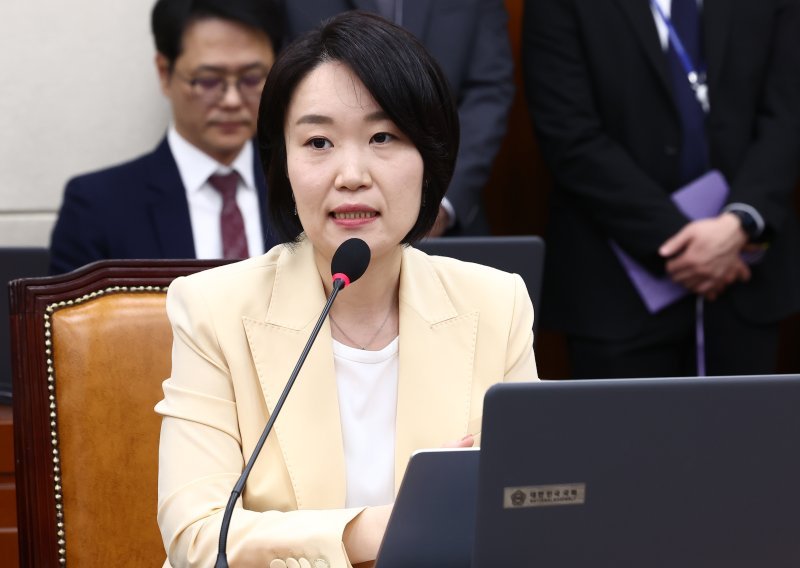
Lee So-young, a member of the Democratic Party of Korea, questioned whether it is reasonable to impose taxes on major shareholders who own 1 billion won worth of stocks, which is less than the price of an average apartment in Seoul, where the average price exceeds 1.4 billion won. It is a valid and reasonable point. Kim Byung-ki, the floor leader, also mentioned the possibility of readjusting the 1 billion won major shareholder criteria as the stock market turned into a sharp decline. It is right to revise the tax reform plan to fit reality even now.
The same goes for the corporate tax increase. What benefit can it bring to our economy when it is out of step with the global trend of lowering corporate taxes to attract businesses? Although addressing the tax revenue shortfall is urgent, the answer should be found through unnecessary expenditure restructuring. Despite this, complacent judgments such as "the stock market will not collapse by strengthening the major shareholder criteria (Jin Sung-joon, Policy Committee Chairman)" will only worsen the situation.
Concerns are also pouring in over the additional commercial law amendments. At a recent National Assembly public hearing on the commercial law amendment, Choi Jun-sun, an honorary professor at Sungkyunkwan University, analyzed that if the commercial law is further amended, the largest shareholder's share among the seven directors could be limited to 2-3 members. On the other hand, it was predicted that shareholders below the second largest could secure up to five directors and exercise voting rights. In such a case, it could significantly negatively impact not only the infringement of management rights but also the growth structure of companies.
Professor Choi also predicted that companies might avoid growth to evade commercial law regulations applied to listed companies with assets of over 2 trillion won. If many companies do not wish to grow, the damage will inevitably be passed on to the state and the people. According to a recent survey conducted by the Korea Chamber of Commerce and Industry on 300 listed companies, 74% of companies responded that there is a possibility of a threat to management rights if the cumulative voting system and the expansion of separate election of audit committee members included in the additional commercial law amendment are simultaneously reflected. In a country where companies tremble with management anxiety, what future competitiveness can be discussed? The Lee Jae-myung government should revisit the principle of pragmatism centered on the market and companies.