Soju and Beer Decrease, OOO Increases.. Alcohol Consumption Changes in the 'Era of Personal Taste'
- Input
- 2025-08-03 15:06:21
- Updated
- 2025-08-03 15:06:21
Traditional leaders Soju, Beer Show Decline in Shipment
Convenience Stores and Large Marts Expand Wine and Whiskey Categories and Continuously Release Highball Products
"I Like It Because It Doesn't Taste Much Like Alcohol"… Sometimes Leads to Overdrinking
Convenience Stores and Large Marts Expand Wine and Whiskey Categories and Continuously Release Highball Products
"I Like It Because It Doesn't Taste Much Like Alcohol"… Sometimes Leads to Overdrinking
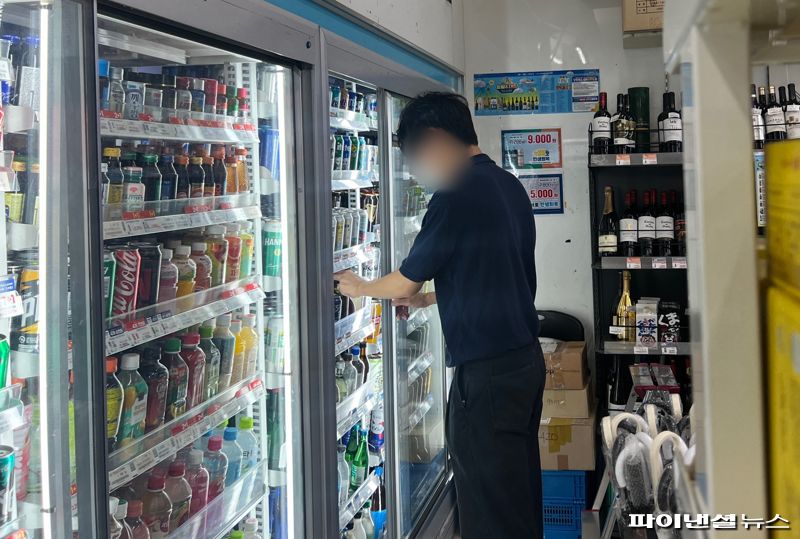
[Financial News] As we enter the 'era of hyper-personalization', the uniform alcohol consumption trend centered on soju and beer is rapidly changing. The liquor market is becoming segmented as various types of alcohol such as highball, wine, and whiskey grow evenly, focusing on 'delicious alcohol for me' rather than the act of drinking itself, especially among the MZ generation.
According to the National Tax Service on the 3rd, the shipment volume of soju and beer, the traditional strongholds of Korean alcohol, is continuously decreasing. The domestic shipment volume of diluted soju was 844,250 kL (kiloliters) in 2023 and 815,712 kL in 2024, decreasing by 2.0% and 3.4% respectively compared to the previous year. Beer also decreased by 0.7% and 3.0% to 1,687,101 kL in 2023 and 1,637,210 kL in 2024 compared to the previous year.
Instead of the declining consumption of soju and beer, which divide the liquor market, the alternative liquor market such as wine, whiskey, and highball is expanding. According to Emart, the number of wine items in the first half of this year reached 6,100, an increase of about 52% compared to three years ago in 2022. Whiskey also more than doubled from 500 types to 1,200 types during the same period.
The highball is undoubtedly the representative item of the liquor segmentation trend. Highball is a mixed drink that combines distilled spirits with carbonated beverages. From the most basic 'whiskey + tonic' combination to combinations with fruit syrup, popular drinks, and ice cream, various combinations are possible. The alcohol content also varies from low-alcohol drinks in the 3-degree range to products over 9 degrees, with demand rapidly increasing among the younger generation. According to GS25, highball sales in the first half of this year increased by 81% compared to the same period last year. Among whiskey, wine, and highball, the share of highball expanded from 26% to 40% in one year, surpassing whiskey (34.1%) and wine (25.9%) to take the top spot. Highball is emerging as a market pivot beyond just a 'craze'.
Mr. Heo, in his 20s, said, "The biggest attraction of highball is its cost-effectiveness," adding, "I originally enjoy making and drinking it myself according to my taste, but due to the cost of ingredients and time, I almost buy it these days." Mr. Kim, also in his 20s, said, "I thought alcohol was bitter, so I didn't drink much, but these days, a lot of sweet highballs are coming out, so my alcohol consumption has increased."
Some express concerns that sweet highballs and others may encourage excessive drinking. In Japan, the highball product 'Strong Zero', which is popular among the young generation in their 20s and 30s, is a high-alcohol drink with 8-9 degrees but hardly tastes bitter. As a result, it has sometimes become a social issue due to its misuse for relieving depression or stress.
An industry insider said, "In a social atmosphere where various individual tastes are directly linked to consumption, the era of only drinking 'somaek' (soju + beer) is over," adding, "As more consumers choose their drinks according to their taste, the product lineup is naturally diversifying."
localplace@fnnews.com Kim Hyunji Reporter