[fn Editorial] Korea-US Negotiation Concluded, Scrutinize Toxic Clauses and Pros and Cons
- Input
- 2025-07-31 18:37:21
- Updated
- 2025-07-31 18:37:21
Differences in Perspective on Investment Fund Returns between Korea and US
Prepare for Possible Additional US Demands
Prepare for Possible Additional US Demands
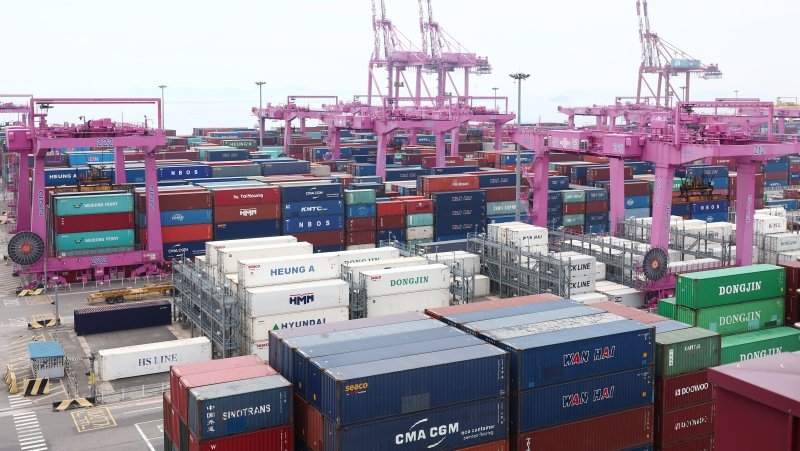
Looking into the negotiation details, Korea's mutual tariff rate was reduced from 25% to 15%. This figure is at the same level as the trade agreements previously concluded with Japan and the European Union (EU). From Korea's perspective, which has to compete with Japan and the EU in the US market, agreeing at a 15% tariff level is fortunate. It is a result that our companies can sufficiently handle with their capabilities.
However, it is premature to think that all uncertainties have been resolved with this Korea-US negotiation conclusion. The Korea-US negotiation should be seen as just the beginning, not the end. As the saying goes, "the devil is in the details," we must meticulously scrutinize the toxic clauses hidden in this Korea-US negotiation agreement and assess the long-term pros and cons that may affect us.
First, in the agricultural sector, protecting the beef and rice markets is undoubtedly an achievement. However, significant concessions are inevitable in other agricultural product sectors.
We must comprehensively assess the areas we have to concede in exchange for protecting our livestock and rice markets and precisely calculate the national interest's profit and loss.
The bigger issue is the promised $350 billion investment in the United States. The astronomical scale of investment in the US involves both government and public corporations, as well as private companies' investment amounts.
The investment in the US will act as a double-edged sword for our economy. Of course, through investment in the US, our companies' overseas expansion will become active, and opportunities to enter the US advanced technology sector will arise, which is positive. Furthermore, in the long run, in the flow where China is dominating the global market, solidifying the Korea-US economic alliance may provide an opportunity to secure market leadership. There are clear benefits from the perspective of national interest.
We must also consider the opportunity cost that will affect our economy. If a massive amount of investment capital flows overseas, domestic investment capacity will inevitably shrink significantly. Small and medium-sized enterprises and venture companies will face difficulties in raising funds. There is also concern that the hollowing out of domestic industries will accelerate. Investment in domestic production facilities is necessary for liquidity to circulate smoothly, job creation, and domestic demand activation.
The issue of profit distribution resulting from investment in the US is also a point that must be clearly defined. US Secretary of Commerce Howard Lutnick emphasizes that "the US takes 90% of the profit from Korea's investment funds in the US." On the other hand, Kim Yong-beom, the Presidential Office's Policy Chief, offers a different interpretation, saying, "The mention of 'taking 90% of the profit' should be understood as a reinvestment concept."
If the US side's claim is correct, the investment in the US is close to unilateral support for the US. This is something that cannot happen in capitalism. Such conflicting interpretations could become seeds of serious disputes in the future, so it is necessary to clearly establish standards for investment conditions and profit distribution.
It is not the time to self-praise the results of the Korea-US tariff negotiation, nor is it the time to celebrate. At times like this, we must be even more cold-headed. We must strive to realize national interests based on pragmatism in the subsequent discussion stages while re-examining the specific contents of the negotiation.