'Water Entered' K-Beauty, Food, and Pharmaceuticals, "Avoided the Worst"
- Input
- 2025-07-31 17:23:55
- Updated
- 2025-07-31 17:23:55
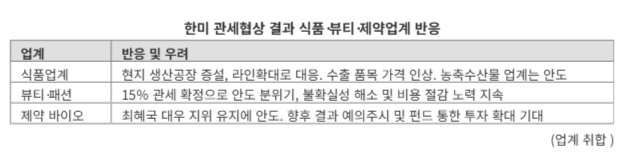
[Financial News] With the Korea-US mutual tariff set at 15%, K-Food, K-Beauty, and K-Pharmaceutical companies expressed relief, saying "uncertainty has been resolved." Although there may be changes depending on the results of further negotiations, they believe they can respond by strengthening local investment and securing competitiveness, as the conditions are not disadvantageous compared to competing countries.
According to related industries on the 31st, the rapidly growing K-Beauty industry in the United States is focusing on the fact that a significant portion of uncertainty has been resolved with the conclusion of the Korea-US tariff negotiations. The atmosphere in the industry is one of relief as the initially feared 25% imposition was reduced to 15%. Amorepacific has been preparing various response measures through collaboration with local retail partners, keeping in mind the possibility of tariff increases. An Amorepacific representative stated, "While price adjustments are also under consideration in the event of a tariff increase, we aim to alleviate cost burdens through logistics efficiency and marketing cost adjustments." Beauty tech company APR, which has a significant portion of its sales in the US, has been proactively responding by expanding volumes and optimizing costs since the early stages of the potential tariff increase, so the impact on performance is expected to be minimal.
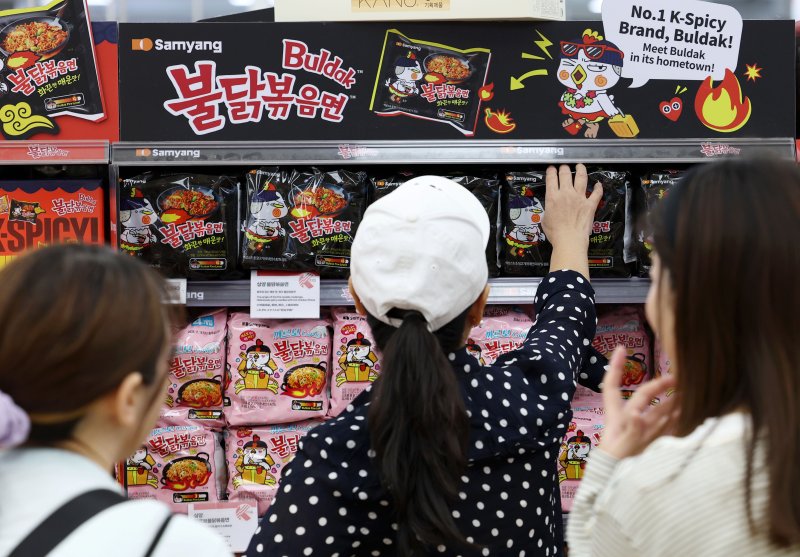
The food industry experienced mixed fortunes depending on whether they have local production facilities in the US. Samyang Foods produces and exports all of its Buldak Bokkeum Myun and other products from its Miryang plant in Gyeongnam. Compared to food companies like Nongshim or CJ CheilJedang, which have local factories, there are concerns about a 15% reverse margin. As a result, Samyang Foods plans to implement some price increases by product and distribution network after consultations with major distribution channels and partners in the US. Daesang, which entered the US market with its Jongga brand, is also affected. A Daesang representative said, "We plan to respond by keeping all possibilities open, including expanding production facilities such as the LA plant in the US, strengthening local production, and reducing costs."
The pharmaceutical and bio industries also welcomed the relatively low tariff imposition compared to competing countries. In particular, the creation of a $200 billion fund, agreed upon to strengthen the strategic industry cooperation between the two countries, is expected to play a positive role in the entry of domestic pharmaceutical and bio companies into the US market.
The level of tariff imposition on pharmaceuticals has not yet been confirmed, but the likelihood of a high tariff of over 20%, as previously mentioned by US President Donald Trump, has decreased. Like Japan, which concluded tariff negotiations earlier, Korea is also expected to receive 'most-favored-nation treatment' for pharmaceuticals, reducing the burden of high tariff imposition. However, uncertainty still remains, and domestic pharmaceutical and bio companies are closely monitoring the situation. In fact, Samsung Biologics stated, "We are closely analyzing the US government's announcement and are reviewing various options."
However, Celltrion, which has over 30% of its business in the US, has secured two years' worth of product inventory in the US and established a production base worth 700 billion won in the US, escaping tariff risks. As the US government demands 'Made in USA' products, they have come up with an active response plan that meets these requirements.
A pharmaceutical and bio industry representative said, "The expansion of funding opportunities through the fund will be a priming water for the pharmaceutical and bio industries, which are in desperate need of initial investment funds," and "It will be a stepping stone for domestic companies to enter the world's largest US pharmaceutical market."
[email protected] Lee Hwanju, Kang Jungmo, Lee Jeonghwa reporters