Electricity Generated from Leaves
- Input
- 2025-07-31 11:09:03
- Updated
- 2025-07-31 11:09:03
Professor Yoon Hyo-jae's team from Korea University's Department of Chemistry reveals the ion Seebeck effect of leaves
Electricity generated as moisture and ions inside leaves move with temperature differences
Electricity generated as moisture and ions inside leaves move with temperature differences
The team led by Professor Yoon Hyo-jae from Korea University's Department of Chemistry successfully generated electricity from leaves without any processing. About 45 millivolts (mV) were generated from living leaves attached to trees, and up to 7 volts (V) from dried leaves. This principle uses ions and water inside the leaves, proving that plants can serve as high-performance energy conversion devices.
The first author, researcher Kang Hoon-gu, stated on July 31, "The fact that leaves can act as 'living thermoelectric devices' that generate electricity by receiving heat is a new function of plants that has not been noticed until now," and "This research result shows a convergent research paradigm connecting chemistry, biology, and energy science."
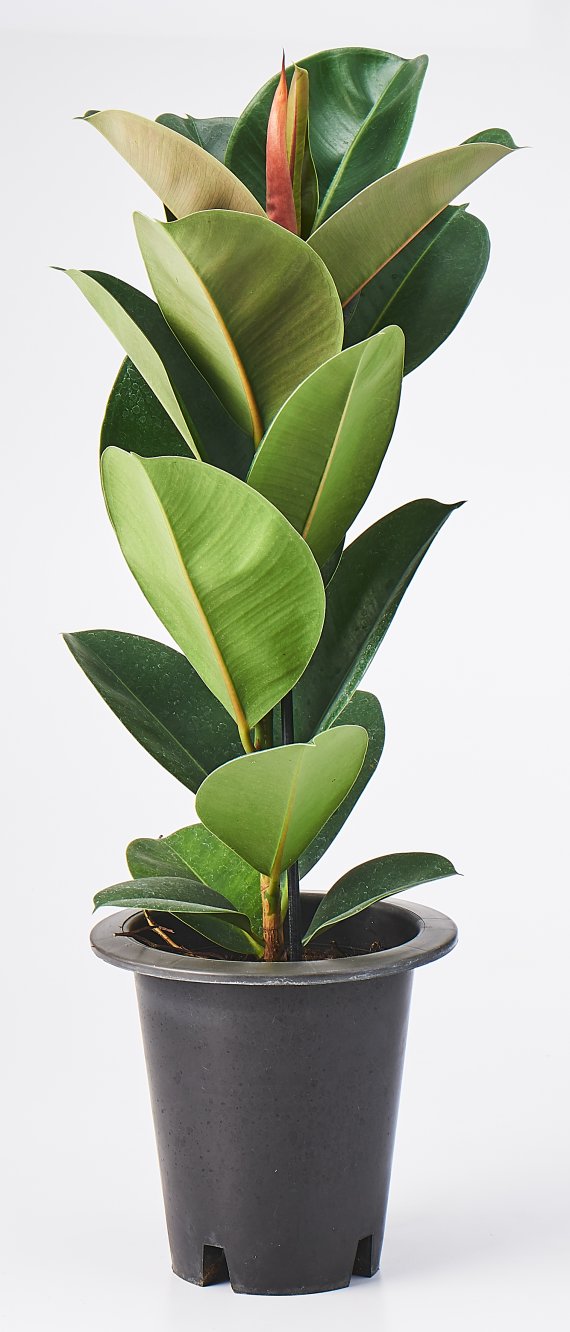
First, the research team focused on rubber tree leaves, which are commonly seen around us. They got the idea from the fact that plants continuously move ions inside their bodies while alive. The team started the experiment with the curiosity, 'Could ions generate electricity as they move?'
First, they cut the leaves into small pieces of 1cm x 2cm and attached 'electrodes' to both ends to conduct electricity. They then made one side hot and the other cool to see how different the temperatures were.
As a result, electricity was generated from the leaves with just a small temperature difference of 2 to 10 degrees. Particularly, electricity was generated even when the leaves were fresh, but much more electricity was produced when the leaves were 'dried.'
The research team experimented with dried leaves using something called carbon tape as electrodes. As a result, at room temperature of about 25 degrees, the leaves showed a performance index (ZT) of 5.6, which indicates the efficiency of converting heat to electricity. This is the highest score obtainable from natural materials.
Even leaves dried for four days produced a voltage close to 7 volts (V), enough to fully charge a mobile phone battery, with just a small temperature difference of 10 degrees. The research team explained, "When leaves are dried, a special film forms on the surface, which makes electricity stronger."
Additionally, electricity was generated not only from cut leaves but also from 'living leaves.' The research team attached electrodes to living leaves and exposed them to light like sunlight to create a temperature difference in the leaves.
As a result, the leaves continued to generate about 45 millivolts (mV) of electricity consistently with an 8-degree temperature difference while growing healthily without damage.
This shows that the leaves we carelessly discard can become an eco-friendly energy source that does not pollute the environment.
Meanwhile, the research team published this research result in the internationally renowned journal 'Advanced Materials.'
[email protected] Kim Man-gi Reporter