"Negative Impact on Korean Competitiveness".. Following European, American Chamber of Commerce Also 'Opposes' Labor Law
- Input
- 2025-07-30 16:13:36
- Updated
- 2025-07-30 16:13:36
European Chamber of Commerce mentions "Withdrawal from Korea"
American Chamber of Commerce mentions 'APEC'
American Chamber of Commerce mentions 'APEC'
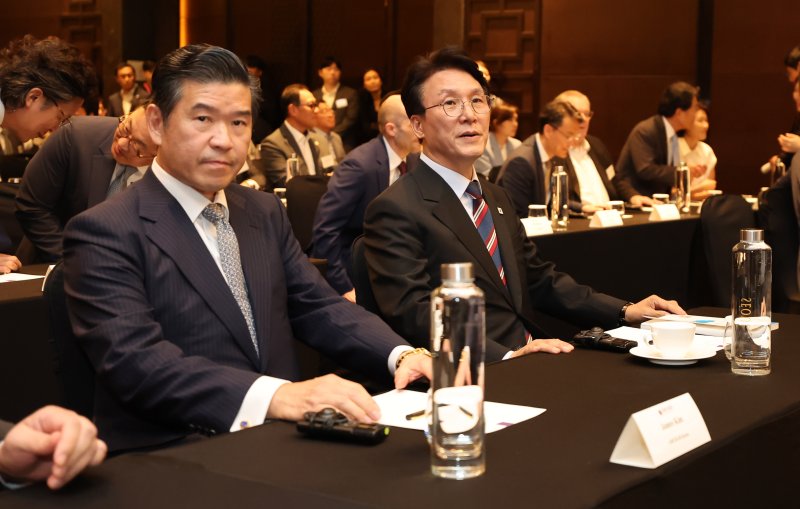
[Financial News] The so-called Yellow Envelope Law, the amendment to Articles 2 and 3 of the Labor Union Act, is being pushed forward, and following the European Chamber of Commerce in Korea (ECCK), the American Chamber of Commerce in Korea (AMCHAM) also expressed concerns on the 30th, saying, "If this bill is implemented in its current form, it could affect the willingness of American companies to invest in Korea in the future."
Recently, ECCK issued a warning that if the Yellow Envelope Law is implemented, resulting in a situation where businesspeople face criminal punishment, they would withdraw from Korea. In this context, AMCHAM hinted at the possibility of restricting U.S. investment in Korea.
Not only the domestic business community but also foreign-invested companies in Korea are expressing concerns about the Yellow Envelope Law, raising concerns about withdrawal from the Korean market and reduced investment in Korean companies, drawing attention to whether this will affect the future promotion of the bill.
AMCHAM, the largest foreign chamber of commerce in Korea, pointed out in a statement that the recent amendment to Articles 2 and 3 of the Labor Union Act, processed by the National Assembly's Environment and Labor Committee led by the ruling party, "could increase legal and operational burdens on global companies, including American companies operating in Korea."
James Kim, Chairman and CEO of AMCHAM, emphasized, "A flexible labor environment is a key factor in strengthening Korea's competitiveness as a business hub in the Asia-Pacific region," adding, "This amendment could further increase uncertainty and negatively impact Korea's global competitiveness."
Chairman Kim, who pointed out the processing of such a bill ahead of the 2025 Asia-Pacific Economic Cooperation (APEC) summit, warned, "At this point, we need to consider what signal this bill could send."
AMCHAM also expressed opposition when the bill was first proposed last year, emphasizing concerns about the uncertainty of the business environment and regulatory risks.
The amendment to Articles 2 and 3 of the Labor Union Act expands the scope of protection for subcontracted workers and limits claims for damages resulting from strikes, as well as expands legal responsibility for management that does not engage in collective bargaining.
Prior to this, ECCK urged a reconsideration of the amendment, stating, "If faced with the risk of criminal punishment for refusing negotiations due to an unclear negotiating union, we may withdraw from the Korean market."
Considering the numerous criminal punishment clauses imposed on employers under the Labor Union Act, ECCK argued that the vague and expanded definition of employers could make businesspeople potential criminals and shrink business activities. ECCK is an organization established in 2012 to represent European companies operating in Korea, with about 400 member companies currently active. hjkim01@fnnews.com Hakjae Kim, Reporter