United States Delays Final Agreement Citing China's Purchase of Russian Oil
- Input
- 2025-07-30 14:41:44
- Updated
- 2025-07-30 14:41:44
US-China, The Key to the Final Agreement of the 3rd Trade Negotiation Lies with Trump
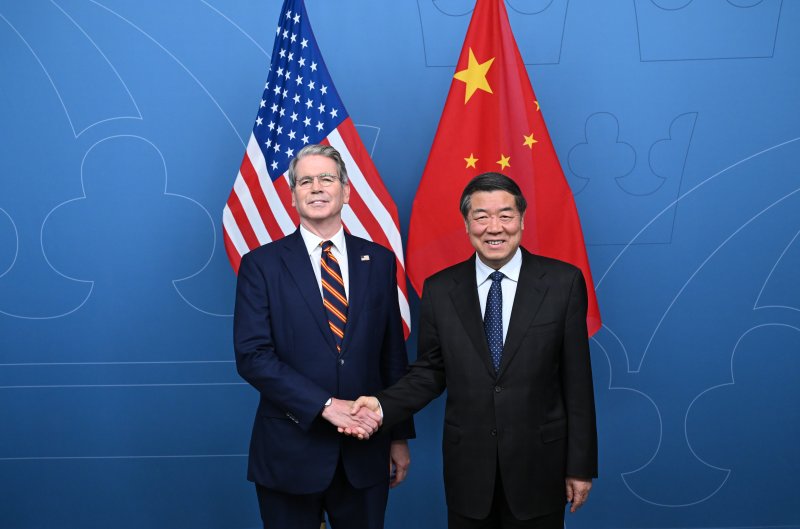
[Financial News] The United States and China parted ways without reaching a final conclusion in the 3rd trade negotiations, stumbling over China's import of Russian oil. The Chinese side declared that a 90-day grace period was agreed upon. However, the US stated that the final agreement is pending Donald Trump's final decision, creating a stark contrast. The US intends to keep the issue of China's purchase of Russian oil as a negotiation card while pressuring Russia.
US-China, Tentative Agreement in 3rd Negotiation
The US and China concluded the 3rd negotiation over two days on the 29th (local time) in Stockholm, Sweden, to extend the tariff grace period expiring on the 11th of next month. Scott Besant, US Treasury Secretary, and Jamison Greer, USTR representative, attended from the US side, while He Lifeng, Vice Premier of the State Council, attended from the Chinese side.
After the negotiation, Li Chenggang, Vice Minister and International Trade Negotiation Representative of the Ministry of Commerce, stated, "The two countries have agreed to continue the grace period for the 24% mutual tariffs between the US and China's countermeasures."
However, Secretary Besant drew a line, stating, "Nothing is agreed until discussed with President Trump." He mentioned that if President Trump does not approve, tariffs on Chinese products could revert to 34% set on April 2 or be imposed separately. Nonetheless, the US-China negotiation team stated that the 3rd negotiation was constructive and productive. The two countries raised tariffs to 145% and 125%, respectively, after the inauguration of the Trump administration and lowered them to 30% and 10% through two negotiations.
President Trump, speaking to reporters on a plane returning from Scotland, said, "I spoke with Besant and had a good meeting with the Chinese side," adding, "I will brief tomorrow (30th), and we will decide whether to approve this." He also mentioned plans to meet Chinese President Xi Jinping by the end of the year.
Cameron Johnson, senior partner at supply chain consulting firm Tidal Wave Solutions, said, "The Stockholm meeting continued to ease tensions between the two countries, but this meeting will delay the issue and serve as an opportunity for the two leaders to find a breakthrough in the fall."
US Raises Issue of China's Purchase of Russian Oil
Political media outlet Politico analyzed that the US brought a complex agenda to Stockholm. The US raised issues regarding China's purchase of Russian oil and the supply of dual-use technology used by Russia in the Ukraine war. According to CNN, Besant mentioned the possibility of US Congress passing a bill to impose up to 500% tariffs on countries buying Russian oil, stating, "US allies will also be made to take similar measures to cut off Russia's energy revenue." President Trump announced earlier this week that if Russia does not reach a major peace agreement with Ukraine, a 100% secondary tariff will be imposed on the country (buying oil).
Secretary Besant sarcastically commented on China's response, "China values its sovereignty very much, and we do not want to infringe on their sovereignty," adding, "Therefore, China wants to be subject to an additional 100% tariff." China is the largest purchaser of Russian oil, importing about 2 million barrels per day.
However, both countries hope the trade dispute will not escalate further. The US showed sincerity by lifting the ban on the sale of Nvidia's key AI chips to China earlier this month. China reciprocated by halting the antitrust investigation into DuPont. Additionally, China added two ingredients used in the manufacture of fentanyl to the export control substances list. The Trump administration imposes a 20% tariff on China for its responsibility in the distribution of fentanyl in the US.
pride@fnnews.com Lee Byung-chul Reporter