US-Japan, Tariff Agreement Without a Formal Document... Benefit or Detriment?
- Input
- 2025-07-30 13:44:30
- Updated
- 2025-07-30 13:44:30
An unprecedented method where a presidential decree is implemented without a formal agreement document
Japan considers the rapid reduction of tariffs without documentation to be advantageous
Uncertainty remains due to Trump's potential policy reversals and re-escalation threats
Japan considers the rapid reduction of tariffs without documentation to be advantageous
Uncertainty remains due to Trump's potential policy reversals and re-escalation threats
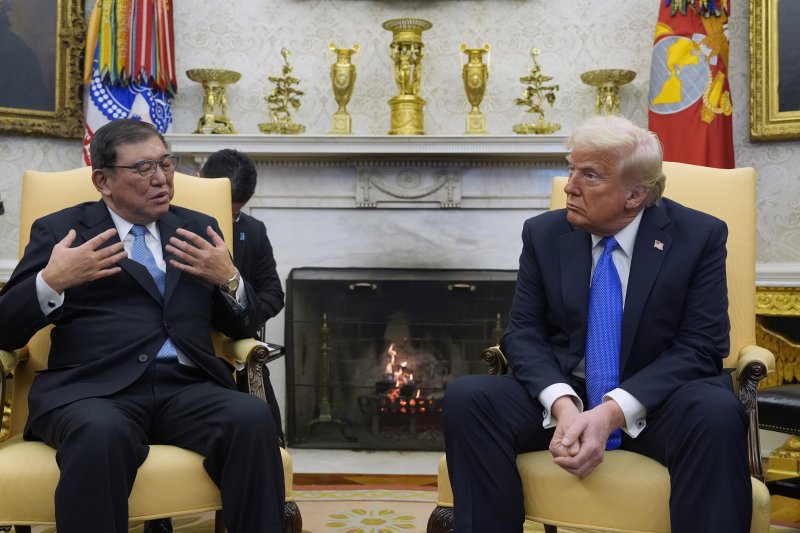
【Tokyo=Kim Kyung-min Correspondent】 The US-Japan tariff agreement, pushed forward without a formal document, is becoming a contentious issue. The Japanese government prioritized the swift implementation of tariff reductions, skipping document preparation, but concerns are growing over the potential backlash due to differences in interpretation between the two countries and the possibility of policy reversals by US President Donald Trump.
According to local media on the 30th, Akazawa Ryosei, Minister for Economic Revitalization, stated at a press conference the previous day, "It is better for the US to issue a presidential decree to realize a 15% tariff rate as soon as possible rather than creating an agreement document."
The US had already raised tariffs on Japanese automobiles to 27.5%, and was planning to raise mutual tariffs to 25% starting August 1. However, the two countries agreed to lower them to 15% each, which will take effect immediately once implemented through a presidential decree by the US. The Japanese government aims to avoid the cumbersome procedure of document preparation to quickly reduce the burden on domestic companies.
Trump's 'overturn' risk is also a consideration. Akazawa Minister stated on NHK broadcast on the 27th, "If we try to create a joint document, ministers will repeatedly have to ask President Trump, 'Is this wording okay?'" Trump frequently changes his decided policies, so if we seek judgment again, there is a risk that the agreement may be overturned or conditions may be adjusted upwards.
The calculation is that it is advantageous not to create a joint document. The secured tariff reduction measures leave no room for interpretation, so there is no need to create a document.
On the other hand, Japan promised to invest in the US and purchase American products in exchange for tariff reductions. However, the explanations from both countries do not match.
The US document specifies that "Japan will invest $550 billion (approximately 760 trillion won) according to US instructions." In contrast, Japan explains that the $550 billion is the total amount of contributions, loans, and guarantees from government financial institutions, with the contribution amount being only 1-2% of the total. If an agreement document is created, the US claim may be reflected in the official document, making Japan's obligations clearer. However, without an agreement document, there is a risk that the US may not adhere to the agreement.
The Japanese government plans to monitor the implementation of the bilateral agreement through a task force under the comprehensive countermeasure headquarters in response to US tariff actions.
km@fnnews.com Kim Kyung-min Reporter