US Leaving International Organizations One After Another... Pulling Out of OECD Too?
- Input
- 2025-07-30 14:26:18
- Updated
- 2025-07-30 14:26:18
US Republicans Submit Bill to Stop OECD Budget Support
Dissatisfaction with Global Minimum Tax and Digital Tax Led by OECD
"Do Not Support OECD Activities Targeting US Taxpayers"
Will Trump, Who Withdrew from Many International Organizations, Leave OECD Too?
Dissatisfaction with Global Minimum Tax and Digital Tax Led by OECD
"Do Not Support OECD Activities Targeting US Taxpayers"
Will Trump, Who Withdrew from Many International Organizations, Leave OECD Too?
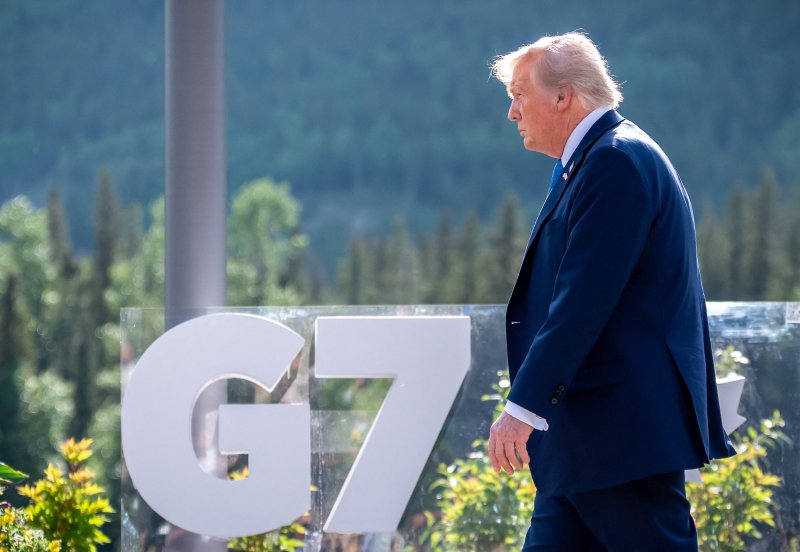
[Financial News] As Donald Trump, President of the United States, continues to withdraw from international organizations since taking office, the US ruling party has introduced a budget cut bill targeting the Organization for Economic Cooperation and Development (OECD). They argued that the OECD is pushing for multinational taxation that harasses US companies and that the US should no longer fund the OECD.
According to the UK Financial Times (FT) report on the 29th (local time), US House Republicans have submitted a bill to cut OECD support budget to the House. In the report recommending the bill, Republican members of the House Appropriations Committee emphasized, "The Appropriations Committee does not support OECD activities that target US taxpayers by pushing for higher tax rates, raising the corporate tax floor, and encouraging digital tax plans." The OECD, headquartered in Paris, France, has a budget of 235 million euros (about 375.7 billion won) this year, and the US is responsible for about 18% of it. Currently, the Republican Party holds a majority in both the US Senate and House, but as the House enters summer recess from the 23rd, the related bill can only be processed in September.
Previously, the OECD pushed for a 'global minimum tax' to prevent multinational companies from avoiding taxes by being headquartered in countries with low corporate tax rates. In the 2021 agreement, 143 countries, including OECD member states, agreed to impose a minimum 15% corporate tax on large companies with a certain level of revenue, regardless of where their headquarters are located. At the same time, they agreed to stop the competition to lower corporate taxes between countries.
Separately, since 2013, the OECD has led discussions to prevent tax avoidance by digital companies operating in multiple countries without a physical presence. Some Western countries, including France, are already collecting an additional 2-3% digital tax from digital companies that generate revenue in their countries without a fixed business establishment.
US big tech companies like Google, Apple, and Amazon are targets of the global minimum tax and digital tax associated with the OECD. Trump strongly opposed the related tax discussions during his first term. Shortly after the start of his second term, Trump withdrew from the global minimum tax agreement and added a retaliatory tariff clause to the US government budget law for the following year. Trump added a clause to the bill that imposes retaliatory taxes on business, dividend, and interest income generated in the US by countries imposing discriminatory taxes on US companies. In response, the G7 countries announced in June that they would partially exempt US companies from the global minimum tax. Consequently, the US decided to remove the retaliatory tax provision.
Additionally, Canada attempted to introduce a digital tax last month, but Trump immediately halted trade negotiations, leading to its repeal. India also withdrew its digital tax introduction while engaging in trade negotiations with the US.
Before last year's US presidential election, the Heritage Foundation, a US right-wing think tank, drafted the 920-page 'Project 2025' policy proposal, which was called the blueprint for Trump's second government. The policy proposal included more aggressive content, suggesting that the Trump second government should not only stop supporting the OECD but also withdraw entirely. Trump has already announced the withdrawal from the Paris Climate Agreement, the UN Human Rights Council, UNESCO, and the World Health Organization (WMO) since the start of his second term this year. Matthias Cormann, Secretary-General of the OECD, emphasized regarding the Republican bill, "The US is an important founding member." He further argued, "The OECD is an important platform for shaping global economic policy and setting standards on major issues in cooperation with market-based democracies worldwide."

pjw@fnnews.com Jongwon Park, Reporter