'Jeju Mackerel Disappears'... Food Industry Rushes to Peru and Chile Due to Abnormal Climate
- Input
- 2025-07-28 16:20:17
- Updated
- 2025-07-28 16:20:17
[Financial News] As 'climateflation' (climate + inflation) becomes a constant rather than a variable, the diversification of raw material supply lines by catering and food material companies is expanding in all directions. In particular, due to the impact of abnormal climates such as floods and heatwaves, companies are increasing their own stockpiles to counter fluctuating agricultural prices and are rapidly shifting to multinational strategies for major imported raw materials.
Food Material and Catering Companies on Alert for Climateflation
According to the industry on the 28th, the auction price of some leafy vegetables and fresh foods has risen by more than 150% compared to last year due to recent abnormal weather in the country.
Hyundai Green Food official said, "Due to recent abnormal weather, the auction price of some leafy vegetables and fresh foods has increased significantly compared to last year," adding, "As of late July, the price of green peppers rose by 154%, leafy vegetables like spinach by 92%, watermelon by 71%, and spinach by 52%."
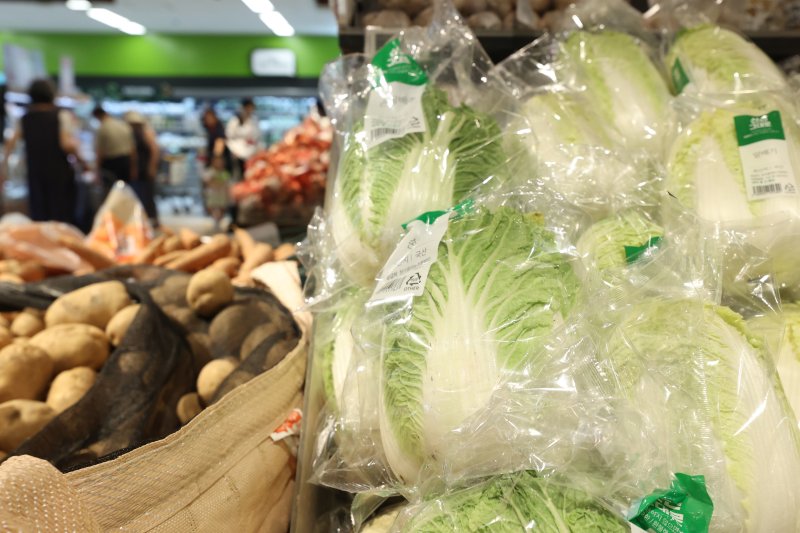
'Leafy vegetables' like cabbage, lettuce, and spinach are sensitive to temperature and humidity, and have a short harvest period, making them vulnerable to climate changes like heatwaves and floods. Fruits like watermelon and marine products are also affected by weather anomalies, leading to large price fluctuations. In the case of cabbage, it takes 3-4 months to harvest, and it is shipped four times a year, with the temperature during growth affecting the yield.
A Samsung Welstory official said, "Leafy vegetables like cabbage show the effects of climate influences like heatwaves and floods 1-2 months after harvest," adding, "If a heatwave is expected, early shipment is possible, but if a heatwave occurs during growth, it affects supply (price)."
Samsung Welstory, CJ Freshway, Ourhome, and other catering and food material companies are pre-purchasing and stockpiling key items like cabbage, radish, and seasoning vegetables at the company level to prevent this.
A catering industry official said, "Although the company stockpiles some items like cabbage, it is affected by various variables like stock prices," adding, "The government sometimes releases stockpiles to the market, and prices are affected by the supply from small and medium-sized distributors and auction markets."
Imported Food Materials Also Unstable, Securing Alternatives
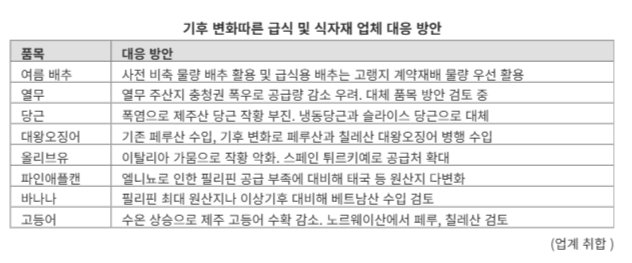
The food material industry is paying more attention to diversifying suppliers due to increased supply and price volatility of overseas food materials caused by global abnormal temperatures. For instance, in the case of Peruvian giant squid used in catering, they are also importing Chilean giant squid due to climate change.
Additionally, items like olive oil, canned pineapple, bananas, and mackerel are diversifying their supply sources depending on the supply situation and climate changes in major import countries. A catering company, which mainly sourced olive oil from Italy, expanded its supply to Spain and Türkiye after poor crop conditions due to drought in Italy. Mackerel prices from Norway, a major mackerel import country, also rose as supply decreased due to rising sea temperatures around Jeju. Consequently, the company expanded mackerel import countries to Peru and Chile.
A catering company official said, "Norwegian imported mackerel is also quite expensive, so we predict the annual usage of mackerel and stockpile domestic mackerel in winter for supply."
Items with rapidly rising prices are sometimes replaced with alternative products. Instead of fresh carrots from Jeju, frozen carrots are used, and instead of watermelon, other fruits like peaches or grapes are utilized.
A food material company official said, "To manage overall supply and quality, we are selling imported products in parallel with local contracts," adding, "We are actively utilizing alternative products such as pre-processed, frozen, and smart farm crops."
[email protected] Lee Hwan-joo