Loss of Nationality Leads to Loss of Pension Eligibility... Court Says 'Not an Administrative Disposition'
- Input
- 2025-07-28 10:15:24
- Updated
- 2025-07-28 10:15:24
Court Says 'Eligibility Automatically Disappears Without Separate Disposition if Reason for Loss Occurs'
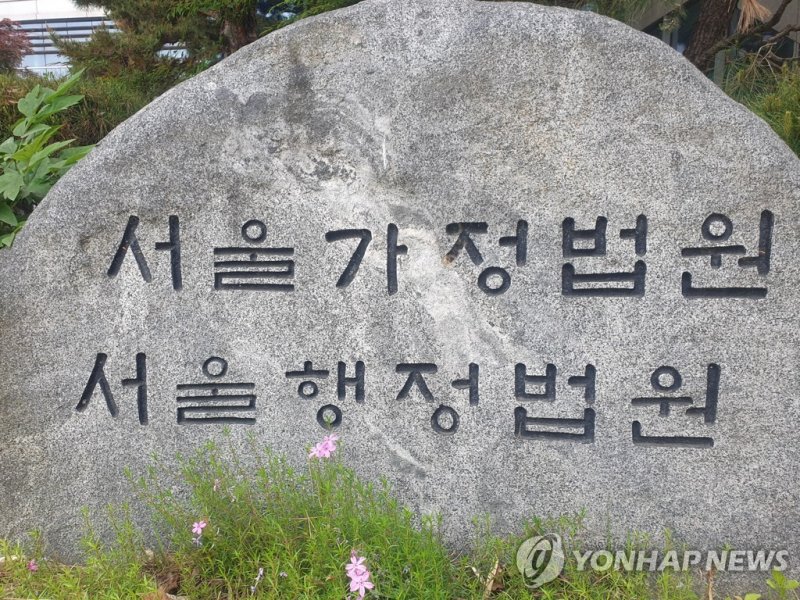
[Financial News] The court ruled that retroactively canceling the voluntary pension subscription eligibility due to loss of nationality cannot be considered a 'disposition'.
According to the legal community on the 28th, the Seoul Administrative Court's 13th Division (Chief Judge Jin Hyunseop) dismissed a lawsuit filed by Mr. A against the National Pension Service on May 22nd, seeking cancellation of the disposition. Dismissal is a procedure that ends a lawsuit without a substantive judgment because the formal requirements of the lawsuit are not met.
Mr. A lost his qualification as a national pension business subscriber upon retirement in 1997 and rejoined as a regional subscriber in April 1999. Later, in November 2008, he lost his regional subscriber qualification under the 'no-income spouse' condition and applied for voluntary subscription (joining by personal choice) in September 2009, receiving an old-age pension for about 14 years.
Subsequently, the Ministry of Justice notified the corporation in February 2024 that Mr. A lost his Korean nationality as of March 16, 2005, and the corporation retroactively canceled Mr. A's voluntary subscription eligibility as of March 17, 2005, and suspended pension payments. The date of loss of regional subscriber qualification was also changed from the existing November 20, 2008, to March 17, 2005.
Mr. A requested a retrial, but when it was dismissed, he filed a lawsuit claiming that the suspension of old-age pension payments was an infringement of property rights and violated the constitutional prohibition of retroactive legislation, the principle of equality, and the basic principles of the national pension. He particularly emphasized that he had informed the corporation's official of his U.S. citizenship at the time of voluntary subscription in 2009 and received confirmation that there was no problem with his eligibility, and that he had restored his nationality from January this year.
However, the court dismissed the lawsuit, ruling that the corporation's notification was not a 'disposition' subject to litigation. The court determined that if a legally defined reason arises for a national pension voluntary subscriber, the 'effect of losing eligibility' occurs without a separate disposition.
The court stated that the notification was merely an act of informing the change in eligibility and timing, and could not be seen as directly causing a change in rights and obligations such as the change in Mr. A's subscriber eligibility.
The court also stated that the loss of old-age pension eligibility due to Mr. A not meeting the 10-year subscription period was a 'natural legal effect' and could not be considered as a 'pension payment suspension disposition'.
Even assuming a substantive judgment, the court found Mr. A's claims unacceptable. The court explained that the 'right to receive old-age pension for those with less than 10 years of subscription' has never been recognized as a property right. The differentiation according to the subscription period was seen as distinguishing the right to receive benefits in proportion to the contribution to the formation of resources for the efficient operation of the national pension.
Furthermore, regarding Mr. A's claim of 'confirmation by the corporation that there was no problem with eligibility', the court stated that there was no evidence to support it, and the corporation's official's guidance was related to 'U.S. citizenship', not 'loss of nationality', and therefore did not violate the principle of protection of trust.
scottchoi15@fnnews.com Choi Eunsol Reporter