[fn Editorial] Using K-Shipbuilding as Leverage to Make Small Concessions and Gain Big
- Input
- 2025-07-27 19:14:33
- Updated
- 2025-07-27 19:14:33
Korea-US Tariff Negotiations, 4 Days Left of Destiny
It's Hard to Get Everything You Want in Negotiations
It's Hard to Get Everything You Want in Negotiations
There are only four days left until the deadline for the Korea-US tariff negotiations on the 1st of next month. This is an imminent showdown that will determine the fate of the South Korean economy, which is struggling with sluggish domestic demand and exports and is trapped in a tunnel of low growth. As seen in Hyundai Motor's poor performance, the outcome of this negotiation will have a significant impact on the future of our companies and the national economy.
The current negotiation atmosphere is not too bad. This is evident from the remarks of Donald Trump, the President of the United States, who is quick to break off negotiations if they do not align even slightly with his desired direction. President Trump said on the 25th (local time) ahead of trade negotiations with the European Union (EU), "We also did it with Korea. I think we have been given a lot of respect." This gives the impression that some agreement has been reached.
The White House also gave a positive evaluation of the negotiations with Korea, calling them "productive." Our trade team managed to arrange an additional meeting with Howard Lutnick, the U.S. Secretary of Commerce, which was not scheduled, and reportedly continued the meeting late into the night at Lutnick's residence in New York.
On the 25th, when the Korea-US 2+2 trade consultation led by Deputy Prime Minister and Minister of Economy and Finance Koo Yoon-cheol was postponed due to a sudden notification from the United States, turbulence was formed. The Presidential Office held emergency strategy meetings over the weekend to discuss response measures. The two countries decided to continue last-minute negotiations between Deputy Prime Minister Koo and U.S. Treasury Secretary Scott Besant around the 30th to 31st, just before the tariff implementation date. Foreign Minister Cho Hyun is also expected to meet separately with U.S. Secretary of State Marco Rubio soon.
Fortunately for us, K-Shipbuilding, which has the highest global competitiveness, is becoming the key 'trigger' for the conclusion of the negotiations. The Presidential Office stated, "We have confirmed the U.S. side's high interest in the shipbuilding sector and decided to create feasible solutions, including shipbuilding cooperation." K-Shipbuilding is one of our 'strong cards' that the U.S. considers a 'necessary and sufficient condition' to win in the manufacturing revival and maritime hegemony competition with China. Recently, Japan, which concluded a 15% mutual tariff agreement with the U.S., lags far behind us in shipbuilding capabilities.
The 'Big 3 K-Shipbuilding Companies' of HD Hyundai, Hanwha Ocean, and Samsung Heavy Industries are expected to enhance our last-minute negotiation power as they possess all the conditions the U.S. desires, including technology transfer for shipbuilding, strengthening U.S. naval power, supporting the modernization of the U.S. shipbuilding industry, local construction, and workforce training. There is also a high possibility of establishing a partnership with the U.S. for Alaska LNG development.
As the conclusion of the Korea-US negotiations is predicted to be imminent, if an agreement is reached soon, interests will diverge depending on the details. Farmers may strongly oppose the opening of the agricultural and livestock markets.
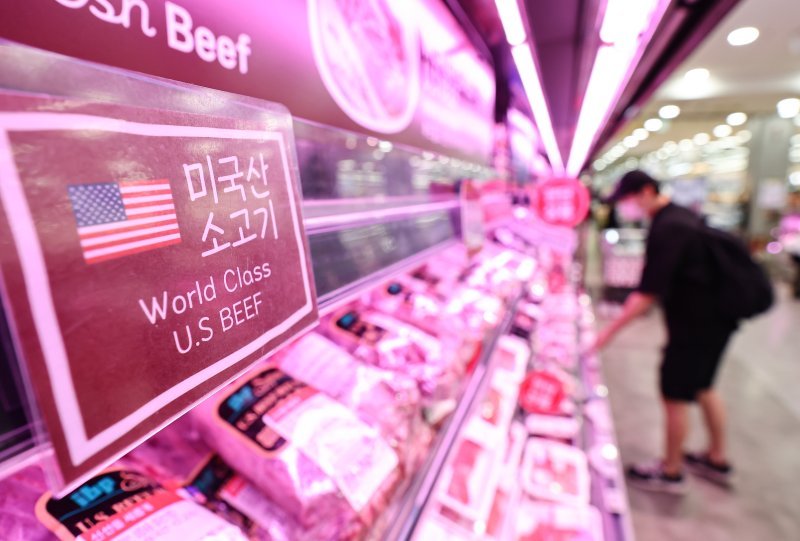
Among them, the import allowance for rice and beef over 30 months old is the most sensitive issue. The easing of online platform regulations and the opening of the U.S. automobile market also have a significant impact on related domestic industries.
There can be no negotiations where you only receive and do not give. From the perspective of overall national interest, we must carefully weigh the gains and losses and adopt a strategy of gaining big and conceding small.
We hope to draft the best agreement by maximizing our negotiation cards, such as shipbuilding and semiconductors. Depending on the results of the agreement, we should separately seek countermeasures, such as preparing support measures for the expected damage to the agricultural sector, etc.