Industrial Accident with Personal Fault... How to Calculate Compensation Amount [Seocho Cafe]
- Input
- 2025-07-27 12:52:12
- Updated
- 2025-07-27 12:52:12
"Even without third-party involvement, 'Deduct then Comparative Negligence' method applies"
Supreme Court overturns lower court ruling that applied 'Comparative Negligence then Deduct'
Supreme Court overturns lower court ruling that applied 'Comparative Negligence then Deduct'
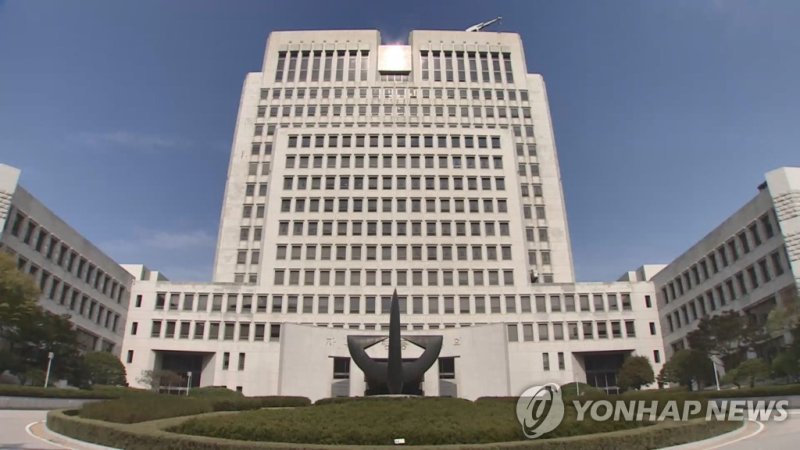
[Financial News] When calculating the lost income damages of a worker who suffered an industrial accident, the Supreme Court has ruled that the 'Deduct then Comparative Negligence' method should be applied even if there is no third-party involvement. This means that insurance benefits should be deducted first from the lost income damages, and then the negligence ratio should be considered.
According to the legal community on the 27th, the Supreme Court's 3rd division (Presiding Judge Oh Seok-jun) overturned the original ruling that partially favored the plaintiff in a lawsuit filed by Mr. A against construction company B for damages, and sent the case back to the Seoul Central District Court.
Mr. A suffered an accident in June 2021 while cutting plywood with a grinder at a new construction site of company B, injuring his wrist. The Korea Workers' Compensation and Welfare Service recognized this accident as a work-related injury under the Industrial Accident Compensation Insurance Act and paid Mr. A 54.2 million won.
Subsequently, Mr. A filed a lawsuit against the company claiming compensation for the remaining damages not covered by the industrial accident insurance. Lost income refers to the future income that the victim is presumed to have lost due to the accident.
The first and second trials found the company liable to compensate Mr. A for damages as it failed to fulfill its duty of care. However, they also recognized Mr. A's negligence, limiting company B's liability to 70%.
Accordingly, when applying a 70% liability ratio to the lost income damages of 67.3 million won, the amount company B had to compensate was 47.1 million won. Since the industrial accident insurance payment was 54.2 million won, it was determined that company B had no amount to pay. The 'Comparative Negligence then Deduct' method was applied because the insurance benefits were paid due to the employer's illegal act, not a third party.
Meanwhile, company B was only required to pay Mr. A 8 million won in consolation money.
The Supreme Court's judgment was different. The Supreme Court ruled that the 'Deduct then Comparative Negligence' method should be applied, where the insurance benefits are deducted first from the lost income damages, and then the negligence ratio is applied.
It means that from the 67.3 million won lost income, 54.2 million won insurance payment is deducted, and the negligence ratio is applied to the remaining 13.1 million won. Applying this 'Deduct then Comparative Negligence' method, the compensation amount company B has to pay Mr. A is approximately 9.17 million won.
The Supreme Court stated, "Even when a worker suffers an industrial accident due to the employer's illegal act without third-party involvement, and the worker's negligence concurs in the damage occurrence, the Service ultimately bears the amount corresponding to the worker's negligence ratio among the insurance benefits for the worker. This does not change," and "In such cases, the compensation claim amount should also be calculated using the 'Deduct then Comparative Negligence' method."
jisseo@fnnews.com Minji Seo