US Reciprocal Tariff 15%... Why It No Longer Seems High
- Input
- 2025-07-26 04:30:00
- Updated
- 2025-07-26 04:30:00
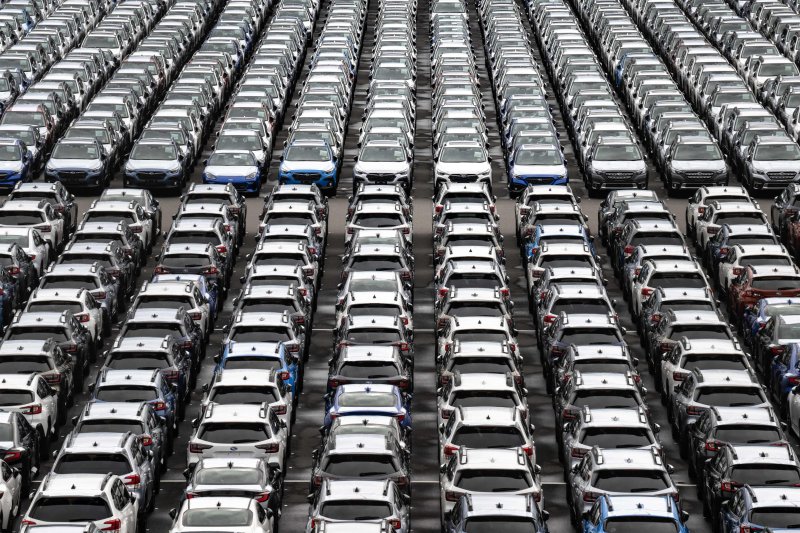
[Financial News] On the 22nd (local time), with the successful conclusion of trade negotiations between the United States and Japan, the 15% tariff rate agreed upon for Japanese imports is becoming a new standard.
On the 24th, the New York Times (NYT) reported that just a few months ago, it was unimaginable for the US to impose a reciprocal tariff of 15% on imports from its ally Japan, but now the atmosphere has changed to the extent that it provides relief rather than a threat.
The European Union (EU), which is facing a 30% tariff imposition if negotiations fail by the 1st of next month from US President Donald Trump, also wants to agree at 15% instead of the initial target of 10%.
Previously, a 15% tariff was high enough to sound an alarm, but after the US-Japan trade agreement, Asian and European stock markets have risen, particularly noting a 10% increase in the stock prices of Japanese car manufacturers.
The newspaper analyzed that this market reaction shows that US President Donald Trump, who led the tariff imposition, has generalized tariffs within a few months, and given that he also threatened higher tariffs, it now even provides relief.
This background is attributed to the great uncertainty caused by President Trump during trade negotiations, and considering that negotiations are difficult and Japan had the House of Councillors election, it is surprising that an agreement was reached.
Japan succeeded in reducing the tariff on cars exported to the US from 25% to 15%, gaining a lifeline, according to financial experts.
Moreover, by obtaining concessions from the Trump administration, Japan's automotive industry was protected from higher tariffs, according to Michal Jozwiak, a market analyst at financial services firm EBury.
Jozwiak positively evaluated that among the remaining negotiations, it is noteworthy how much the US will impose tariffs on car-exporting countries such as South Korea, Mexico, and the European Union (EU), while Japan's agreement shows that "the White House has left the door open for compromise."
Matt Gertken, Director of Geopolitical Strategy at global investment research firm BCA Research, said that considering the US accounts for 20% of Japan's total exports, 37% of car exports, and about 43% of overseas investments, and that the US guarantees Japan's defense, "there is no doubt that Japan made concessions for the agreement."
jjyoon@fnnews.com Jaejun Yoon Reporter