Trump Hints at Trade Negotiations: 'Lower Tariffs Like Japan if You Pay'
- Input
- 2025-07-25 09:55:05
- Updated
- 2025-07-25 09:55:05
Trump mentions trade agreement with Japan, saying 'Pay $550 billion upfront to lower tariffs'
Other countries also 'allowed to lower tariffs if they pay'
Emphasizes Japan's investment in the US as American profit
Other countries also 'allowed to lower tariffs if they pay'
Emphasizes Japan's investment in the US as American profit
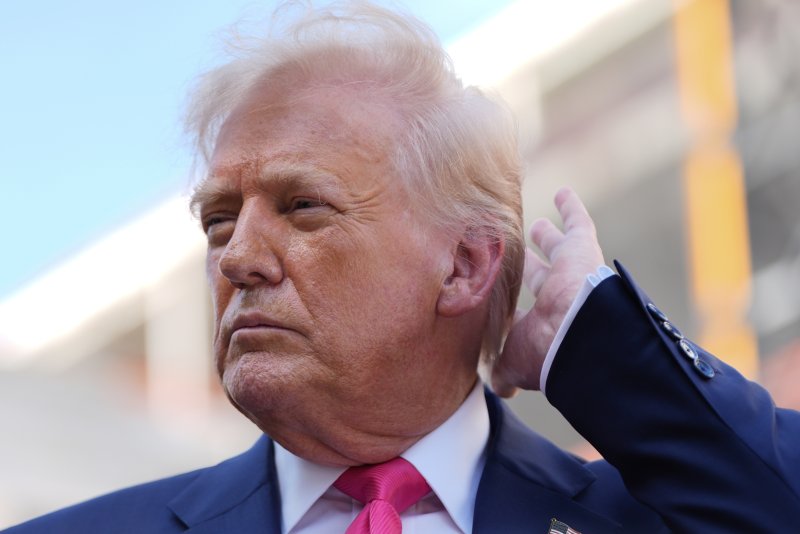
[Financial News] In this month's trade negotiations with Japan, Donald Trump, President of the United States, secured a $550 billion (approximately 756 trillion won) investment from Japan and stated that other countries could lower tariffs like Japan if they do the same. He emphasized that the investment promised by Japan is American profit and that tariffs would be lowered if money is paid to the US.
According to local economic media CNBC, Trump made an unusual visit to the construction site of the Federal Reserve (Fed) headquarters in Washington, DC, USA, on the 24th (local time). He met with the press and explained the trade agreement announced with Japan two days earlier. Trump said, "We lowered Japan's reciprocal tariff rate to 15%," adding, "It was originally about 28%, but they paid money to lower it." When asked if other countries could also lower tariff rates, he said, "Yes. Other countries will also be allowed to lower them if they pay."
Trump claimed that "Japan gave us $550 billion upfront" and said, "I call it a signing bonus." A signing bonus is typically a one-time incentive provided separately from the originally agreed salary or payment during various contracts, such as employment contracts. Trump emphasized that the US takes 90% of the profits generated from the investment promised by Japan, saying, "This is not a payment or a loan, but a signing bonus."
He said, "They gave us $550 billion and lowered tariffs a bit, agreeing to open up the economy. This was not an easy task," and explained, "Opening up the economy is worth more than $550 billion," adding, "It is more valuable than the money they paid. So, we combined that money and economic opening to lower tariffs to 15%."
With the expiration of the reciprocal tariff suspension at the end of this month, Trump, who is negotiating with several trade partners, announced on the 22nd that he had concluded an agreement with Japan. On the 7th, Trump notified Japan to pay a 25% reciprocal tariff. During his visit to the Fed on the 24th, he mentioned that the tariff imposed on Japan was 28% and referred to Japan's investment in the US as "seed money."
In this negotiation, Japan prepared a $550 billion US investment support plan using financial institutions and agreed to lower regulatory barriers faced by US companies in some agricultural products, including rice, and the automobile market.
When asked if the European Union (EU), which is currently negotiating reciprocal tariffs with the US, could also have a 15% tariff, Trump replied, "It depends on the situation. What Japan did was pay money to lower tariffs." He said, "The EU is also doing quite well (in negotiations). There are other countries as well. All are very big deals, and our country will make tremendous money," he said.
Meanwhile, South Korean media reported on the 24th, citing a source, that the South Korean government is considering investing more than $100 billion in the reciprocal tariff negotiations scheduled for the 25th, but the US side is demanding more than $400 billion.
pjw@fnnews.com Park Jong-won Reporter