Beware of Complications for Chronic Disease Patients in Deadly Heat… "Drink Water Even If Not Thirsty" [Weekend Health]
- Input
- 2025-07-25 04:00:00
- Updated
- 2025-07-25 04:00:00
August has the most emergency room patients of the year
Heatstroke, enteritis, dehydration, etc. surge
More fatal for hypertension and diabetes patients
Heart rate increases and blood sugar spikes with dehydration
Water with cucumber and lemon is better than caffeine
Chronic disease patients, such as those with hypertension or diabetes, need to be particularly cautious about health management as the heatwave can have a fatal impact on their health. In addition to heat-related illnesses, there is also a surge in patients with injuries during travel in August, when summer vacations are concentrated, making safety management important as well.
■Analysis of 10 years of emergency room visits… "August is the most dangerous month"
On the 24th, an analysis of the National Medical Center statistics over the past 10 years (2014~2023) by the Emergency Medical Center of Bundang Jesaeng Hospital revealed that August is the month with the highest number of emergency room visits. The number of emergency room visits in August reached about 4,981,807.
September (4,935,435) and May (4,909,706) also had high numbers, but they did not surpass August, the peak of midsummer heat.
Kim Young-sik, head of the emergency medicine department at Bundang Jesaeng Hospital, explained, "In midsummer, when temperatures soar above 30 degrees, there is a surge in heat-related illnesses such as heatstroke, sunstroke, acute enteritis, and dehydration," adding, "It is also a time when family unit movements increase due to vacations, leading to an increase in traumatic accidents like traffic accidents or fractures."
In particular, sunstroke caused by extreme heat is an emergency condition where the central temperature regulation is paralyzed, leading to a high fever above 40 degrees, decreased consciousness, and coma. On the other hand, heatstroke occurs due to dehydration, with dizziness, vomiting, and fainting as major symptoms. If sunstroke is suspected, the body temperature should be lowered immediately and 119 should be called.
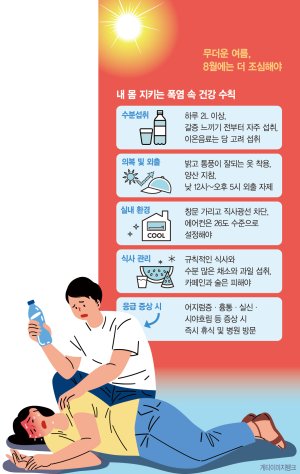
Even if you don't visit the emergency room, basic rules for preventing heat-related illnesses are important. △Frequent hydration △Avoid outdoor activities from 12 PM to 5 PM △Wear bright, well-ventilated clothing and use shade.
■ "Chronic disease patients, more fatal in heat… Increased risk of complications"
The problem is that this kind of heat is more fatal for chronic disease patients such as those with hypertension, diabetes, and cardiovascular diseases. Lee Hae-ri, an endocrinologist at H+ Yangji Hospital, warned, "During heatwaves, the rise in body temperature and dehydration can rapidly change blood pressure and blood sugar, greatly increasing the risk of complications."
For hypertension patients, in high-temperature environments, the repeated dilation and contraction of blood vessels can destabilize blood pressure, increasing the heart rate and burdening the heart. The explanation is that for every 1-degree rise in body temperature, the heart's blood flow per minute increases by about 3L, increasing the risk of cardiovascular disease exacerbation.
Diabetes patients may experience a spike or drop in blood sugar due to increased blood concentration from dehydration. This can lead to hyperglycemic or hypoglycemic shock, and skipping meals due to decreased appetite in summer can be even more dangerous. Especially for diabetic patients with autonomic nervous system complications, the risk of heatstroke is higher due to difficulty in regulating body temperature.
Cardiovascular or kidney disease patients also face increased heart burden during heatwaves as body fluids rapidly decrease, and consuming fluids all at once can lead to secondary issues such as edema, dizziness, and hyponatremia.
The most important things for maintaining the health of chronic disease patients in summer are hydration, regular meals, and body temperature management.
Experts advise, "Even if you don't feel thirsty, drink more than 2L of fluids a day in divided portions, and consider the sugar content when consuming sports drinks."
Also, avoid caffeine and alcohol as they cause diuresis, and drinking water with cucumber, lemon, or mint can be helpful.
The appropriate air conditioner temperature is 26 degrees, and avoid excessive exercise, adjusting activity levels to light walks or stretching. Ultimately, the biggest blind spot in summer health threats is the elderly and chronic disease patients who appear healthy but are more vulnerable to risks. They may experience symptoms gradually or perceive them as mere 'fatigue,' delaying early response. Experts urge, "If there are symptoms of heat-related illnesses or complications, do not endure them and be sure to visit a nearby hospital."
[email protected] Kang Jung-mo Reporter