Hyundai Motor, Loss of 828.2 Billion Won Despite Some Impact of U.S. Tariffs.. Third Quarter is Worse
- Input
- 2025-07-24 16:44:08
- Updated
- 2025-07-24 16:44:08
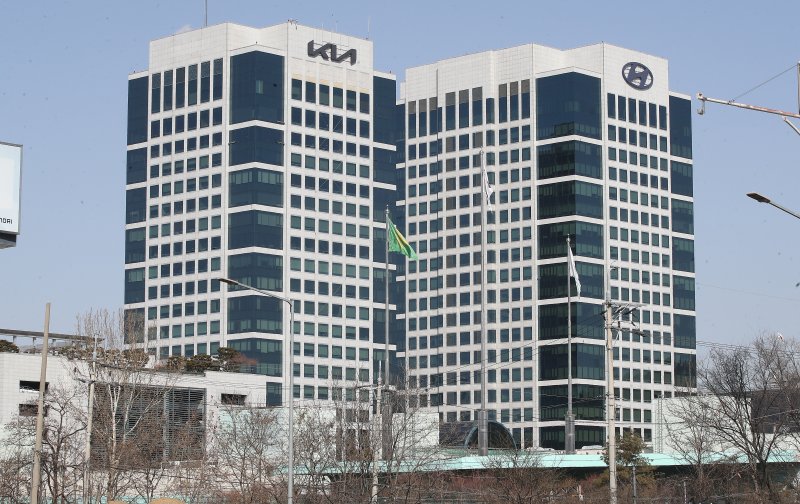
[Financial News] Despite Hyundai Motor's record quarterly sales in the second and fourth quarters, operating profit plummeted by more than 15% compared to the same period last year due to the direct impact of U.S. tariff issues. The impact of U.S. tariffs resulted in an operating profit decrease of 828.2 billion won in just the second and fourth quarters, and Hyundai Motor is concerned that if the current tariff risk continues, the loss in the third and fourth quarters will be even greater.
In a situation where it is difficult to expect visible results from negotiations between the U.S. and Korean trade authorities, Hyundai Motor proposed self-rescue measures to flexibly respond to the market through cost reduction, production efficiency, emergency investment budget planning, and strategic localization of parts, but predicted that the business environment would remain challenging in the second half of the year.
■"Impact of U.S. Tariffs in Third Quarter Will Be Greater Than Second Quarter"
Hyundai Motor's CFO Lee Seung-jo stated at the second and fourth quarter earnings conference call on the 24th, "There was an impact of 828.2 billion won from tariffs in the second and fourth quarters, and it was not affected for the full quarter," adding, "Therefore, it can be predicted that there will be a significant impact in the second half of the year (third and fourth quarters) compared to the second and fourth quarters."
Regarding the proportion of the impact of auto parts tariffs on the overall impact, Lee diagnosed that the impact of parts tariffs would be around 20% of the total, given the effect of credits given for finished cars produced in the U.S.
Despite the partial application of the U.S. tariff issue that began in April during the second and fourth quarters, a loss of over 800 billion won occurred, and unless tariff reductions are achieved in negotiations between trade authorities, it is expected that Hyundai Motor's quarterly loss will exceed 1 trillion won in the third and fourth quarters.
While Hyundai Motor expressed hope that the reduction of tariffs to 15% through negotiations between the U.S. and Japan could positively affect negotiations between the U.S. and Korean trade authorities, it refrained from making premature predictions.
Given that Japan attempted to reduce the impact of tariffs by lowering the export price of related products to North America since May, Lee stated that "there is a transfer pricing issue between the two countries, so it is difficult to hastily lower the export price from Korea to minimize the impact of tariffs."
However, he indicated that the option of lowering export prices has been reviewed from various angles, but adjustments can be made regardless of tariffs.
■Clear Limitations of Self-Help Measures, No Leading Price Increase
As a short-term response plan to offset the impact of U.S. tariffs, Hyundai Motor proposed △flexible incentives and pricing strategies △cost reduction in materials and processing △production efficiency through changes in parts sourcing △contingency plans for operating and investment budgets based on investment priorities.
As a mid- to long-term strategy, the company plans to establish a strategic localization of parts through the establishment of a company-wide collaboration system for R&D, production, and quality, and to flexibly respond to the market by carefully reviewing the expansion of local production of finished cars according to different scenarios.
Cost reduction through processing cost and production efficiency improvement is expected to take effect from the third and fourth quarters if the know-how of Hyundai Motor Manufacturing Alabama (HMMA), which has been in operation for 20 years, is applied to the Hyundai Motor Group Metaplant America (HMGMA) in Georgia.
However, it is pointed out that if a broad agreement between the U.S. and Korea does not provide relief, the limitations as an individual company are clear. It is expected that the immediate effect will be difficult to materialize in the third and fourth quarters, given that even "parts sourcing changes" cannot be achieved in a short period.
Regarding the possibility of a price increase, Hyundai Motor maintained its position of adopting a "fast follower" strategy, stating, "It is difficult to say at what point a price increase will occur."
Lee explained, "We are planning various scenarios," and "We are examining other opportunities such as PIO (Profitability Improvement Opportunity) or plate (products that make up the profit model) that can generate revenue, not just price." hjkim01@fnnews.com Hakjae Kim, Jeongwon Il, Park Kyung-ho reporters