[fn Editorial] Kim, Minister of Employment from Minno, should also listen to the business community
- Input
- 2025-07-22 18:03:00
- Updated
- 2025-07-22 18:03:00
Significant changes expected across the labor market
Various labor issues require social consensus
Various labor issues require social consensus
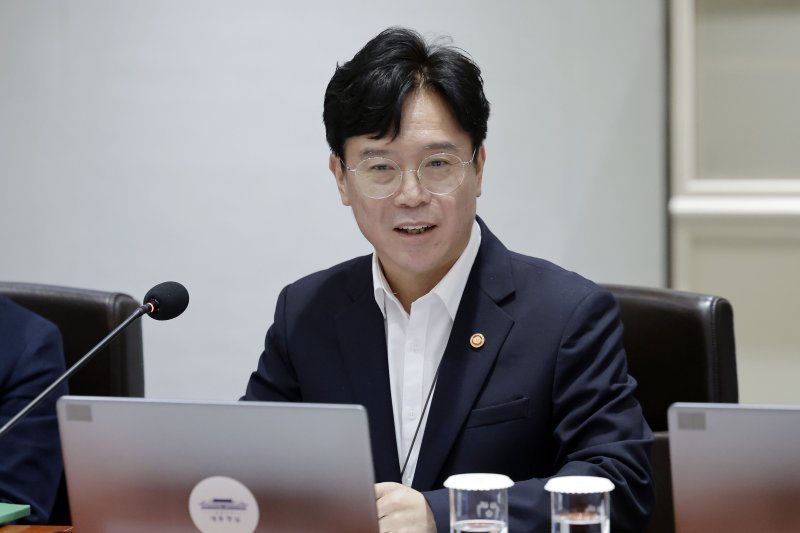
Minister Kim, who is expected to implement pro-labor and pro-union policies, expressed strong determination regarding President Lee Jae-myung's labor pledges, such as the Yellow Envelope Act (amendments to Articles 2 and 3 of the Trade Union Act), the 4.5-day workweek, and the extension of retirement age, stating that they are "paths that must be taken." In particular, regarding the Yellow Envelope Act, he stated that it is a "dialogue promotion law" and a "gap reduction law" that breaks the vicious cycle of dialogue becoming illegal, astronomical damages, and extreme struggles.
However, the business community's concerns about the Yellow Envelope Act are significant. This is because it grants bargaining rights to indirectly employed workers and reduces the scope of liability for damages, significantly increasing the burden on business owners. There is still much controversy about the bias towards the union side, necessitating social consensus.
Minister Kim is said to be classified as relatively moderate even within Minno. His statement, "I will not push any system or policy with an obvious justification," reflects this tendency. It means that rather than pushing through unconditionally according to the government's wishes, he will have a platform for dialogue and discussion, even if it is implemented according to the original government or parliamentary plan.
There is also no consensus on the 4.5-day workweek and the extension of retirement age. Minister Kim believes that these two systems are means to overcome the 'great transformation crisis' faced by our society, such as digital transformation, low birthrate, aging population, and labor force reduction. He believes that by shortening working hours, it is possible to improve the quality of life and increase productivity, achieving two goals at once.
However, the business community opposes the 4.5-day workweek because they argue that if the number of working days is reduced, there will be a burden to hire more personnel. They also prefer a method of selective continued employment of necessary personnel rather than a uniform extension of the retirement age. Like the Yellow Envelope Act, it is an issue that requires sufficient consideration of the business community's position and opinions.
With Minister Kim's appointment, there is a high possibility that Minno, which withdrew from the tripartite dialogue since 1999, will rejoin the social dialogue body. However, even if Minno participates in the dialogue, it is expected that the positions of labor and government will generally coincide, and it is also true that the opinions and claims of the business side may be ignored.
In any case, unilateral policy implementation leads to side effects. Pro-labor policies may favor unions and workers, but they can also be obstacles to the development and growth of businesses, management, and the national economy as a whole. As Minister in charge of policy, Minister Kim should show a very cautious and thoughtful attitude.