Ishiba in Japan Faces '10-Day Deadline' for U.S. Tariff Negotiations After Election Defeat... A Turning Point for the Cabinet's Fate
- Input
- 2025-07-22 10:19:39
- Updated
- 2025-07-22 10:19:39
Losing Majority in House of Councillors Election Shakes LDP's Power Base
Ishiba Cabinet Sees This Negotiation as Justification for Maintaining Power
Skepticism on Whether Direct Communication with Trump is Possible After Election Defeat
Ishiba Cabinet Sees This Negotiation as Justification for Maintaining Power
Skepticism on Whether Direct Communication with Trump is Possible After Election Defeat
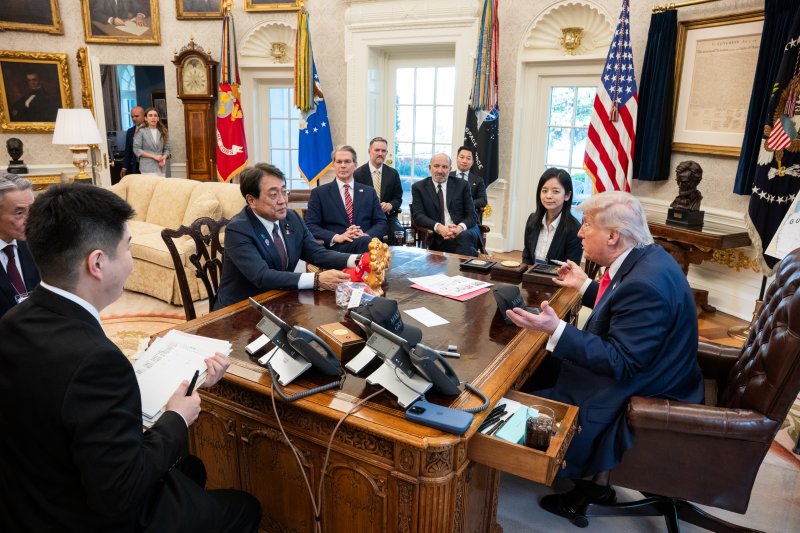
【Tokyo=Kim Kyung-min Special Correspondent】 The Ishiba Shigeru Cabinet in Japan, which suffered a crushing defeat in the House of Councillors (Upper House) election, stands at a critical juncture with just ten days left before the deadline for tariff negotiations with the United States. With the reciprocal tariff increase measures announced by President Donald Trump looming, the success or failure of the negotiations is seen as a watershed moment that could determine the direction of the administration.
Akazawa Ryosei, the Minister of Economic Revitalization, arrived in Washington on the 21st (local time) for the eighth ministerial-level consultation. With the ruling party losing its majority in the House of Councillors election held the previous day, Japan's negotiating conditions are assessed to have worsened. The Ishiba administration, with its shaky power base, has limited options for negotiation cards. Before departing from Haneda Airport, Akazawa stated to reporters, "We humbly accept the election results and will devote all our efforts to pursuing national interests."
Within the Japanese government, there are also opinions that the expansion of imports of American rice should be considered, but strong opposition is expected from the Central Union of Agricultural Cooperatives (JA) and agricultural faction lawmakers within the Liberal Democratic Party. The Constitutional Democratic Party, which made gains in this House of Councillors election, also maintains a negative stance on the import of foreign rice.
The Japanese government has proposed economic cooperation plans to the U.S., such as the reconstruction of the shipbuilding industry. Although the specific details have not been disclosed, if government budgets are utilized, parliamentary approval procedures are necessary. Even if an agreement is reached, budget explanations to persuade the opposition are essential.
In the past, the second Shinzo Abe Cabinet succeeded in major negotiations such as the Trans-Pacific Partnership (TPP), the Japan-EU Economic Partnership Agreement (EPA), and the Japan-U.S. Trade Agreement. The background that allowed overcoming opposition from agricultural organizations was the stable power base supported by consecutive election victories.
In this negotiation, how much time can actually be secured for discussions with U.S. ministers is also a point of interest. The U.S. is conducting simultaneous negotiations with multiple countries, raising the possibility that Japan's priority might be pushed back.
In fact, during Akazawa's seven previous visits to the U.S., most of the schedules were not confirmed at the time of departure, and negotiations were arranged locally. During the seventh visit, despite extending the schedule, he returned without meeting the negotiation counterpart, Treasury Secretary Scott Besant.
The success or failure of this negotiation is directly linked to the future operation of the Ishiba administration. Prime Minister Ishiba held a press conference at the LDP headquarters the previous day, citing the U.S. tariff negotiations as a reason to continue governing despite the election defeat. However, there is criticism even within the LDP, questioning "whether the current Ishiba administration can communicate with Trump."
President Trump indicated on the 16th that "Japan will adhere to the already notified tariff rates," suggesting that a 25% reciprocal tariff could be imposed as planned from August 1st.
km@fnnews.com Kim Kyung-min Reporter