Implementation of Large-Scale Tax Cut Law in the US, Hyundai Electric Vehicle Sales Hit by 2.7 Trillion Won
- Input
- 2025-07-20 13:52:51
- Updated
- 2025-07-20 13:52:51
Implementation of Large-Scale Tax Cut Law in the US on the 4th
Early Termination of Electric Vehicle Purchase Tax Credit
Hyundai Built an Electric Vehicle Factory in the US
Sales Impact Inevitable... Support for Electric Vehicle Industry Needed
Early Termination of Electric Vehicle Purchase Tax Credit
Hyundai Built an Electric Vehicle Factory in the US
Sales Impact Inevitable... Support for Electric Vehicle Industry Needed
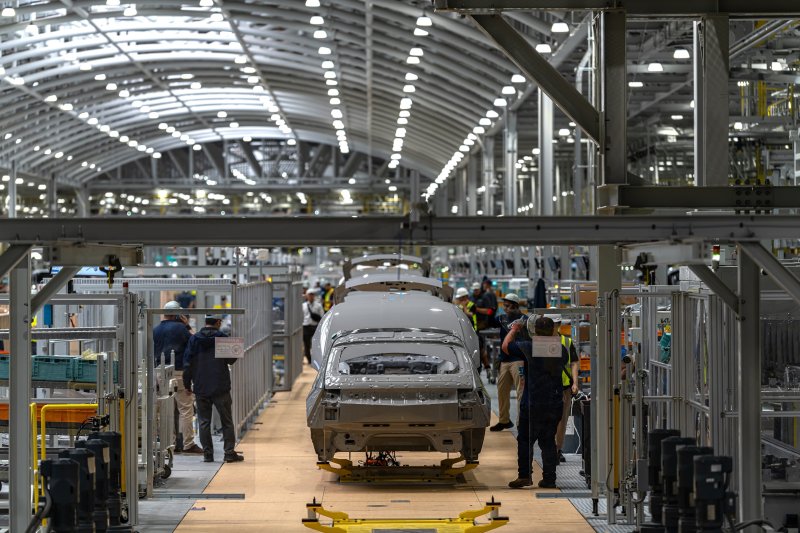
The Korea Economic Association announced in its report 'Impact and Implications of the US Trump Large-Scale Tax Cut Law on the Automotive and Battery Industry' released on the 20th that if the tax credit for electric vehicles ends due to the implementation of OBBBA, Hyundai Motor Group's electric vehicle sales in the US market could decrease by up to 45,828 units annually (sales of 1.95508 billion dollars, approximately 2.72 trillion won). Based on last year's US electric vehicle sales of Hyundai Motor Group (123,861 units), it is predicted that it could decrease by up to 37%. OBBBA includes the early termination of the electric vehicle purchase tax credit, which had influenced Hyundai Motor Group's investment expansion in the US, to the end of September this year. It was initially expected to be maintained until the end of 2032 but was brought forward by about seven years.
This estimate is based on the analysis by the National Bureau of Economic Research (NBER), a US think tank. NBER observed that if the tax credit for electric vehicles in the US is abolished due to the IRA, the sales of electric vehicle manufacturers, including Hyundai Motor Group, which have production bases in the US, could decrease by up to 37% annually.
The Korea Economic Association analyzed that although investment support expectations were high as five electric vehicle models of Hyundai Motor Group (Hyundai Ioniq 5·9, Kia EV6·9, Genesis GV70 electrified model) have been included in the tax credit target since January this year, the investment recovery risk has increased due to the implementation of OBBBA. Furthermore, the Korea Economic Association stated that the profitability of the three Korean battery companies, which have been promoting a significant portion of their production bases in the US in the form of joint ventures with complete vehicle companies, is expected to deteriorate due to the impact of the termination of the electric vehicle tax credit.
The Korea Economic Association argued that to mitigate the impact on the electric vehicle and battery industries due to the implementation of OBBBA and maintain global competitiveness, government financial support such as policy funds and tax benefits is necessary. This includes the amendment of the Industrial Bank Act to establish a 50 trillion won 'Advanced Strategic Industry Fund' in the Industrial Bank and the rapid execution of the fund, as well as the extension of the 'Supply Chain Stabilization Fund Creation Period' (ending in 2029).
Lee Sang-ho, head of the Economic and Industrial Division of the Korea Economic Association, emphasized, "In the uncertain global policy environment, preemptive financial support and institutional arrangements by the government are necessary to maintain a stable production base for our companies and secure international competitiveness," and "Comprehensive support combining funds and tax benefits should be expedited so that the electric vehicle and battery industries can establish themselves as future growth engines."
ehcho@fnnews.com Eunhyo Cho Reporter