"Form a Council and Guarantee Training" The Return Demands Made by Resident Doctors
- Input
- 2025-07-20 13:06:31
- Updated
- 2025-07-20 13:06:31
Korean Association of Resident Doctors Emergency Committee's Demand Approval
Formation of a Council to Review Yoon Government's Essential Medical Policy and Guarantee Training Continuity, etc.
Depending on the Direction of Enlistment Issues, Additional Exams, etc., the Scale and Schedule of Return are Expected to be Determined
Formation of a Council to Review Yoon Government's Essential Medical Policy and Guarantee Training Continuity, etc.
Depending on the Direction of Enlistment Issues, Additional Exams, etc., the Scale and Schedule of Return are Expected to be Determined
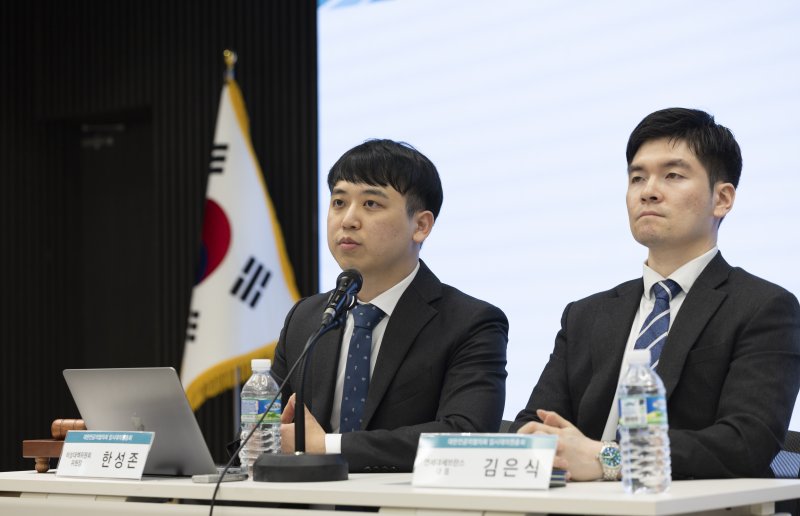
[Financial News] As resident doctors who left hospitals in protest against the government's policy to increase the number of medical students by 2,000 have presented demands for return, such as forming a medical policy council and improving the training environment, attention is focused on whether the ongoing resident doctor vacancy issue, which has lasted for 1 year and 4 months, will be resolved. Although many resident doctors are expected to return in the second half of this year, the scale and timing of the return are expected to be determined depending on whether measures can be taken to guarantee training continuity, such as enlistment postponement and additional exams.
"Demand to Form a New Council and Guarantee Training Continuity"
According to the medical community on the 20th, the Emergency Committee of the Korean Association of Resident Doctors held an extraordinary general assembly at the Korean Medical Association Hall in Seoul on the 19th and approved the emergency committee's demands. The main contents of the demands are △Formation of a council centered on field experts to review the Yoon Seokyeol government's essential medical policy package △Improvement of the resident training environment and guarantee of training continuity △Installation of a discussion body to alleviate legal burdens related to medical accidents, among three main points.
It has been 1 year and 4 months since resident doctors who left hospitals in protest against the government's increase in medical school quotas officially presented their demands through the Korean Association of Resident Doctors. As a new government has taken office and the leadership of the Korean Association of Resident Doctors has changed, it is expected that the medical-political dialogue will gain more momentum.
In particular, it is explained that most of the three demands are already forming a consensus among the government, the medical community, and the political sphere.
In fact, Jeong Eun-kyeong, the nominee for Minister of Health and Welfare, said at the National Assembly confirmation hearing on the 18th regarding the return of resident doctors, "The Ministry of Health and Welfare will quickly create a training council to (discuss) swiftly" and "We must make it an opportunity to improve the training environment for resident doctors and establish a system where they can receive qualitatively proper training."
In this regard, the most critical part in deciding whether or not resident doctors will return or the scale of their return is expected to be the guarantee of training continuity.
In principle, resident doctors who resigned can apply for the second half of the resident recruitment, which will be announced at the end of this month, and resume training from September without any special measures. However, for resident doctors who have not completed their military service, enlistment issues are a stumbling block. Resident doctors are automatically enlisted as military doctors or public health doctors if they resign as military service candidates. Among the resident doctors who resigned last year, about 3,000 were military service candidates, and about 880 of them enlisted in April.
Although some returned in the first half of the resident recruitment, where enlistment postponement was applied, about 1,000 to 2,000 resident doctors are still waiting for enlistment. Therefore, the medical community is also demanding measures that would allow them to return to their original hospitals and continue their training after discharge if enlistment postponement is not possible.
In this regard, it is reported that the Military Manpower Administration is preparing a plan to allow resident doctors scheduled to return in the second half to enlist after completing their training. However, if all resident doctors who have not completed their military service return, there may be no military resources left for next year, making it a difficult issue. Additionally, there are voices among resident doctors demanding measures such as compressing the training period or additional specialist exams to ensure there is no gap until promotion or specialist exams.
More specific details are expected to be discussed in the upcoming medical-political dialogue.
A Ministry of Health and Welfare official said, "Since the resident doctors have set their demands, (the government will) hold a meeting to review the content and organize its position."
First Half 'Big 5' Resident Doctors Doubled Compared to Last Year End...Still Insufficient
Meanwhile, it was found that the number of resident doctors at 'Big 5' hospitals, such as Seoul National University Hospital and Severance Hospital, which had drastically decreased due to collective resignations, more than doubled in the first half of this year compared to the end of last year.
According to the Health Insurance Review and Assessment Service, as of the end of the first half of this year, the number of resident doctors at Big 5 hospitals, including Samsung Medical Center, Seoul National University Hospital, Seoul St. Mary's Hospital, Asan Medical Center, and Severance Hospital, is 548, including 113 interns and 435 residents. Compared to the end of December last year (230), when the medical-political conflict continued, it has increased by about 2.38 times in six months.
It appears that this is due to resident doctors who chose to return one by one this year during the prolonged medical-political conflict. The result also reflects the resident doctors who responded to the additional recruitment conducted for resigned resident doctors in May. However, the number of resident doctors has still not recovered to the level before the medical-political conflict.
As of the first half of this year, the number of resident doctors at Big 5 hospitals remains at a level that is 80.01% lower than the end of 2023 (2,742) before the medical-political conflict.
kim091@fnnews.com Kim Youngkwon Kang Jungmo Reporter