Hanil Seeking Breakthrough with 'Merger'... 'Cautious Mode' in the Cement Industry
- Input
- 2025-07-20 14:43:23
- Updated
- 2025-07-20 14:43:23
Hanil Family Merger... The Rest Choose 'Status Quo'
"Lowest Shipment in 5 Years"... No Sign of Construction Market Recovery
ESG Transition with 'Low Carbon'... Busy with Investments for Survival
"Lowest Shipment in 5 Years"... No Sign of Construction Market Recovery
ESG Transition with 'Low Carbon'... Busy with Investments for Survival
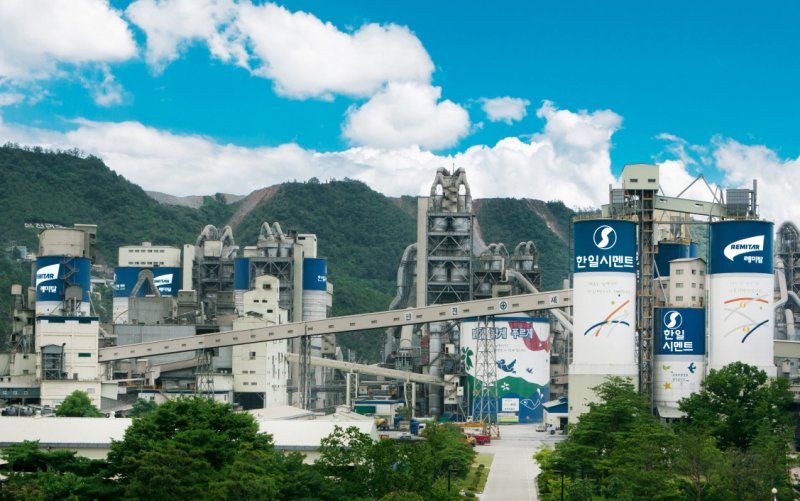
[Financial News] Hanil Cement is pursuing management efficiency by absorbing its subsidiary Hanil Hyundai Cement, raising the possibility of restructuring and business reorganization in the cement industry. This is analyzed as an impact of the domestic cement industry's structural risk of 'low growth and high cost'. However, major companies other than Hanil Cement are expected to approach cautiously for now.
According to related industries on the 20th, Hanil Cement recently held a board meeting and decided to absorb and merge Hanil Hyundai Cement, in which it holds a 77.78% stake, effective November 1. The two companies have been gradually integrating since 2017. With this merger, they aim to resolve the dual structure of listed companies and pursue management efficiency by reducing overlapping investments and external costs. A Hanil Cement official said, "As the economy fluctuates, it will be possible to respond flexibly by utilizing infrastructure such as facilities."
The management situation in the cement industry is already deteriorating. According to the Ministry of Land, Infrastructure and Transport, the construction start area in May was only 6.2 million square meters, a 26.9% decrease from the previous month. The construction start area is generally considered a leading indicator of the construction market. Cement shipments also plummeted. In the first quarter of this year, domestic cement consumption decreased by 21.8% year-on-year to 8.12 million tons, the lowest in the past five years. Compared to 12.01 million tons in the first quarter of 2023, it has decreased by 32.4% in two years.
Nevertheless, the industry's overall response is cautious. Major companies other than Hanil have no plans for mergers or organizational restructuring. A Ssangyong C&E official said, "Although the economy is not good, thanks to exports, the situation is relatively better, and there are no special plans for the time being." Sungshin Cement and Halla Cement officials also said, "We are only focusing on reducing costs and dealing with clients, and are not considering restructuring the governance structure."
The industry sees the current crisis as a double whammy of sluggish demand and fixed cost burdens. The cement industry has a high proportion of facilities, so even if demand decreases, a certain level of operation and manpower maintenance must continue. Moreover, in recent years, external costs such as industrial electricity price increases, carbon emission rights costs, and waste treatment costs have also increased.
Meanwhile, the industry is also responding to the transition to Environment, Social, and Governance (ESG). Due to the high greenhouse gas emissions during cement manufacturing, the pressure for carbon neutrality has intensified. Therefore, they have set a goal to reduce greenhouse gases by 12% by 2030 compared to 2018, and by 53% by 2050. To achieve this, they are focusing on developing low-carbon clinker technology using non-carbonate raw materials instead of limestone, and converting to circular resource fuel such as waste synthetic resin and biomass.
Hanil Cement's recent decision is analyzed to have raised the possibility of simplifying the governance structure and optimizing costs as a survival strategy during the recession.
An industry official said, "The longer a company relies on domestic demand, the shorter the time it can endure," adding, "The key is who changes the structure first and how long they can hold out."
jimnn@fnnews.com Shin Ji-min Reporter