Corporate Voice Phishing in Cambodia Using 'Ma Dong-seok's Name... Caught by National Intelligence Service's Intelligence
- Input
- 2025-07-18 13:53:46
- Updated
- 2025-07-18 13:53:46
With large-scale capital, transfer teams, and romance teams... MZ youth involved as counselors locally
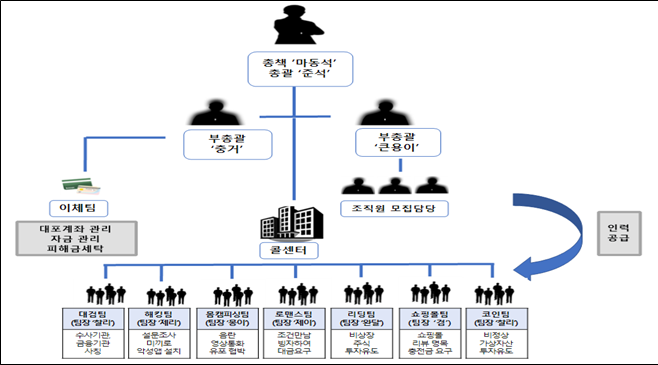
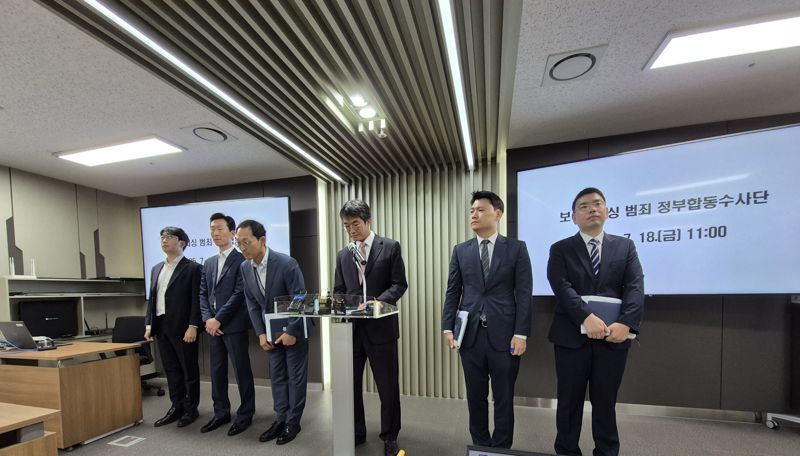
Hong Wan-hee, head of the Seoul Eastern District Prosecutors' Office Voice Phishing Government Joint Investigation Team, held a briefing on the 18th, stating, "We have uncovered a corporate voice phishing organization based in Cambodia, arresting 18 members and pursuing key executives, including the so-called 'Ma Dong-seok' mastermind." All arrested members were confirmed to be Korean.
The revealed criminal organization was essentially no different from a 'call center company.' This organization, identified through intelligence from the National Intelligence Service, was divided into seven specialized teams centered around a foreign mastermind. △ 'Transfer Team' that siphons and launders victims' money △ 'Romance Team' that extorts money by pretending to be sex workers or through conditional meetings △ 'Body Cam Phishing Team' that blackmails with obscene videos △ 'Leading Team' that commits stock and virtual asset investment fraud, each operated according to their assigned roles.
The mastermind 'Ma Dong-seok' provided capital for everything from base rent to airfare and communication equipment for the members, appointing 'team leaders' for each team, effectively setting up 'sales branches.' Profits were distributed in the order of mastermind, team leader, and team members. Hong stated, "This organization is a typical corporate crime organization with internal 'HR Team' and 'Sales Team.'"
The organization particularly targeted the domestic MZ generation. By advertising 'high-paying overseas part-time jobs' and 'short-term call center work' on social networking sites (SNS) and job sites, they lured young people to work locally as counselors. Most of the 18 arrested were in their 20s and 30s. Prosecutor Lee Dong-wook of the prosecution investigation team said, "When young people asked 'how much can you actually pay' or 'isn't this false advertising,' they specifically offered incentives based on successful crimes," emphasizing the need for caution when being lured overseas with promises of high pay on job sites.
The methods of crime were also meticulous. The Romance Team lured victims to join a fake sex trade site developed by the organization, extracting money under the pretext of 'verification costs,' then deceiving them into making additional deposits by promising to return larger sums. They partially refunded the verification process to reassure victims that it was a 'real operating site,' finally extracting larger sums under the excuse of 'verification errors.' Unlike common 'romance scams' that extort money under the guise of relationships, this was closer to 'sex trade guise fraud.'
The joint investigation team arrested 18 members domestically. A significant number of members, including the mastermind and deputy head, remain in Cambodia and other locations. Hong emphasized, "Although there are limitations to jurisdiction as it is a multinational crime organization, we will pursue them to the end through international cooperation and ensure their capture." As voice phishing crimes frequently occur in Southeast Asia, the joint investigation team plans to strengthen cooperation with the region in the future.
The investigation team is also expanding its investigation to include new types of non-face-to-face fraud such as 'no-show fraud,' 'leading room fraud,' and 'purchase agency fraud.' Hong emphasized, "As cases of young people being exploited by voice phishing organizations due to false employment information and being punished increase, we will also conduct crime prevention activities through checking employment agency sites and improving systems."
yesji@fnnews.com Kim Ye-ji Reporter