North Korea's Radioactive West Sea Pollution Ends in Controversy.. Government "No Abnormalities"
- Input
- 2025-07-18 10:29:44
- Updated
- 2025-07-18 10:29:44
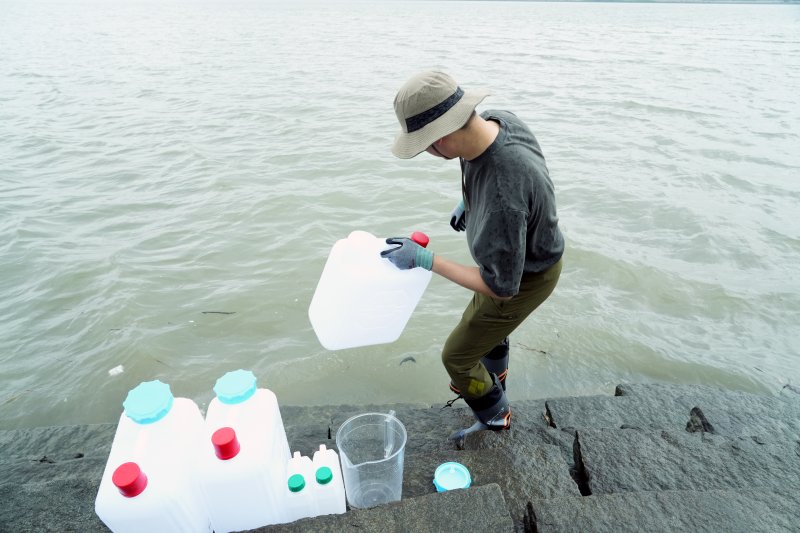
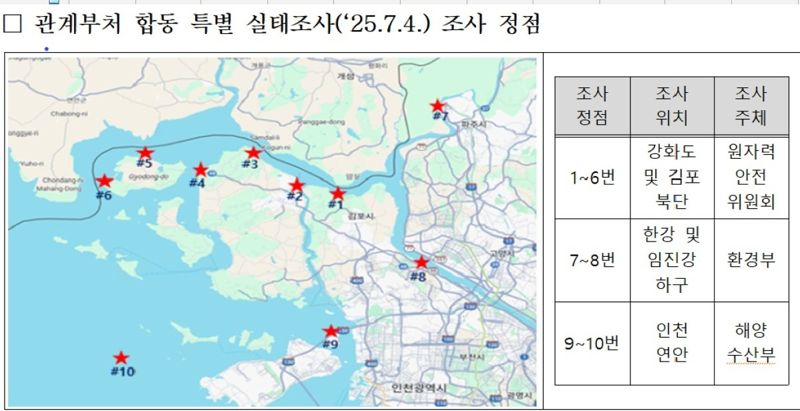
According to the Ministry of Unification on the 18th, the Nuclear Safety Commission, Ministry of Oceans and Fisheries, and Ministry of Environment collected samples from a total of 10 points, including Ganghwado and the Han River estuary, which are closest to the Yesong River estuary flowing from North Korea, and analyzed two types of radionuclides including uranium and five types of heavy metals.
The analysis of uranium concentration in the seawater collected from six points in the Ganghwa and Gimpo areas adjacent to the lower Yesong River (same points as in '19) showed that the levels were relatively lower or similar compared to 2019, which had no peculiarities.
Additionally, the uranium concentration analysis results for two additional points in the Han River and Imjin River estuaries and two points along the Incheon coast compared to 2019 also showed no significant differences compared to the reference points in 2019 (West Sea coast and Han River).
At all points surveyed, radioactive cesium was confirmed to be below the minimum detectable concentration (MDA) or below the levels measured in the West Sea over the past five years.
For all points, the heavy metal items were confirmed to be below the environmental standards according to the 'Framework Act on Environmental Policy' and the marine environmental standards according to the 'Act on the Conservation and Utilization of the Marine Environment' or were not detected.
The government plans to maintain the monthly regular monitoring system for the seven major points surveyed this time and continue operating the inter-agency consultative body to actively respond to public concerns at the government-wide level.
Previously, allegations related to the Pyongsan uranium refinery were officially raised when the Environmental Systems Research Institute (ESRI) in the United States analyzed satellite images and domestic researchers and experts claimed that wastewater from the Pyongsan uranium refinery in Hwanghaebuk-do, North Korea, was being discharged into the West Sea via the Yesong River. Some political circles also joined in demanding government measures.
rainman@fnnews.com Kim Kyung-soo Reporter