Never Wear 'Rain Boots' During Heavy Rain.. A Chilling Warning Emerges [Health Talk]
- Input
- 2025-07-18 06:09:38
- Updated
- 2025-07-18 06:09:38
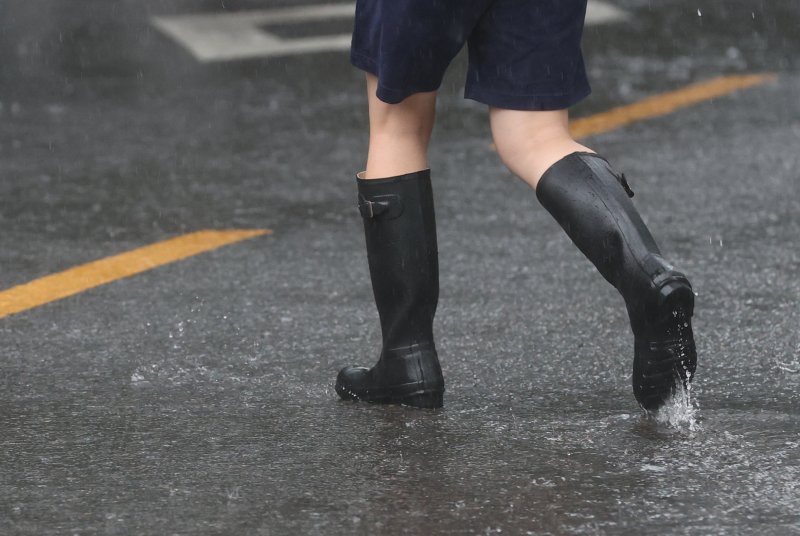
[Financial News] As a water bomb poured overnight on the 17th, more office workers have taken out and worn 'rain boots (boots)' to prevent getting wet in the rain, and a warning has emerged that wearing boots in heavy rain situations can be dangerous.
On the 18th, posters with evacuation tips during heavy rain distributed by Japan NHK are being shared on numerous online communities.
The poster titled 'Things to Keep in Mind When Evacuating on Foot' emphasizes not wearing boots, not entering flooded areas, and moving with others rather than alone when evacuating.
Japan Warns "Avoid Wearing Boots During the Rainy Season"
Most municipalities, including Chiba Prefecture and Tokushima Prefecture in Japan, are warning on their websites, "Avoid wearing boots during the rainy season." The reason is that if water fills the inside of the boots, they become heavy and hinder movement, posing a danger.
Boots have strong water pressure resistance and reduce buoyancy, increasing the risk of drowning even in shallow water. The fact that they cling tightly to the feet and are difficult to remove in water also contributes to accidents.
In 2012, a middle-aged man evacuating while wearing boots in Kumamoto Prefecture had an accident when one boot got caught in a manhole. It is known that he struggled to escape because the water-filled boot did not come off as if it were in a vacuum state.
In 2020, a woman wearing boots in Toyohashi City, Aichi Prefecture, also had an accident when water filled inside the boots while walking on a flooded road, causing her to fall.
Japanese municipalities recommend wearing sneakers with laces instead of boots or easily removable sandals during the rainy season.
While boots are a useful fashion item on rainy days, wearing them for extended periods can adversely affect foot health.
Adverse Effects on Foot Health When Worn for Long Periods
Wearing boots for long periods can adversely affect foot health. Boots are heavier than regular shoes and lack the function of supporting the ankle, putting a greater burden on the feet. This environment can cause or worsen foot diseases such as 'plantar fasciitis.' Plantar fasciitis is a condition where micro-damage and inflammation occur in the plantar fascia, a fibrous band that runs from the heel bone to the toes.
Boots do not properly support the arch of the foot, and the hard sole does not absorb the impact on the foot, putting excessive stress on the plantar fascia. Especially if you have flat feet or low arches, wearing boots for long periods increases the risk of developing the condition.
Additionally, it can cause 'Morton's neuroma,' which causes pain or numbness between the third and fourth toes. Most boots have a narrow toe box and are structured to compress the toes. This compression stimulates the interdigital nerves that go to the toes, causing or worsening pain.
If you must wear boots, choose a design with a wide toe box that allows your toes to move comfortably, and avoid wearing them for long periods as much as possible. Using functional insoles that support the arch of the foot is also a good method.
moon@fnnews.com Moon Young-jin Reporter