Heat-related Illnesses Surge Amid Ongoing Heatwave... 'Heatwave' Threatens Lives [Weekend Health]
- Input
- 2025-07-18 04:00:00
- Updated
- 2025-07-18 04:00:00
1,200 Heat-related Illness Cases... 2.5 Times Last Year
Elderly, Chronic Patients, and Infants Need Special Attention
Avoid Outdoor Activities During Hot Daytime
Cover Body with Cold Towel to Lower Body Temperature
Hydration, Proper Rest, and Diet Are Important
Elderly, Chronic Patients, and Infants Need Special Attention
Avoid Outdoor Activities During Hot Daytime
Cover Body with Cold Towel to Lower Body Temperature
Hydration, Proper Rest, and Diet Are Important
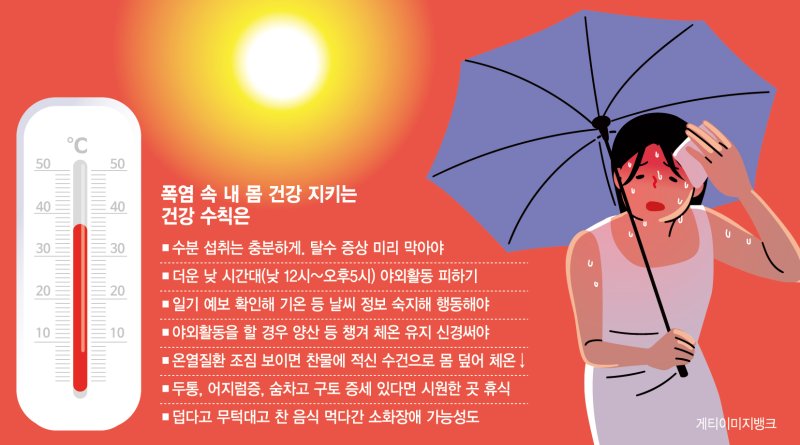
■ Over 1,200 Heat-related Illness Cases Due to Heatwave
According to the Korea Disease Control and Prevention Agency on the 17th, 1,228 people visited emergency rooms for heat-related illnesses from May 15 to July 8 this year, an increase of about 2.5 times compared to the same period last year. The daily number of patients exceeded 200, and there were 8 deaths.
Most heat-related illnesses occurred outdoors where people could not cope with the heat, with those aged 65 and older accounting for 33.6% of the total, and those aged 50 and older accounting for 61.1%.
Shin Hyun-young, a professor of family medicine at Seoul St. Mary's Hospital, Catholic University, stated, "Heatwaves can cause secondary health issues such as infections or heatstroke in cancer patients with weakened immunity, so special attention is needed."
Cancer patients may experience increased fatigue compared to usual, and the risk of hyperglycemia or hypoglycemic shock may also increase. Especially cancer patients with diabetes may have difficulty controlling blood sugar and may experience shock due to dehydration, so exposure to heatwaves should be avoided.
Indoor temperatures should be maintained at an appropriate level, and sudden temperature changes should be avoided. While using air conditioners or fans, it is advisable to refrain from going out and avoid excessive exercise. Nutrition intake is also important. Drink plenty of water and ion drinks to prevent dehydration, and avoid raw or easily spoiled foods. Excessive consumption of cold foods can cause digestive disorders, so caution is needed.
■ 'Heatstroke' When Skin Is Hot and Sweating Stops
Heat-related illnesses include heatstroke, heat exhaustion, heat cramps, heat syncope, and heat edema, and if symptoms are neglected, they can be life-threatening. Lim Ji-yong, a professor of emergency medicine at Seoul St. Mary's Hospital, Catholic University, explained, "A characteristic of heatstroke patients is that their skin is red and hot, but they do not sweat, and severe symptoms such as decreased consciousness, headache, and visual disturbances may occur."
If these symptoms appear, immediately remove clothing, expose the patient to cool air to lower body temperature, and apply ice packs to major blood vessel areas such as the neck and armpits. If the patient is unconscious, secure the airway and immediately call 119, and patient transport must be carried out safely under medical supervision.
Heat-related illnesses are frequently occurring in fields, roadsides, and workplaces. Lee Deok-hee, a professor of emergency medicine at Ewha Womans University Mokdong Hospital, emphasized, "Outdoor workers, the elderly, as well as chronic patients and children with low ability to regulate body temperature are at risk," and "even if you are not thirsty, drink water frequently, rest in the shade, and always check the weather information before going out."
Caffeine or alcohol can actually cause dehydration, so it is advisable to replenish fluids with water or ion drinks. The elderly and infants are more vulnerable to heatwaves due to their weak body temperature regulation functions. Particularly, the elderly often live alone, making them more susceptible to dehydration or heatstroke, and the possibility of disease worsening is high.
Those aged 65 and older should drink at least 8 cups of water a day and avoid going out during strong sunlight hours. The Korea Disease Control and Prevention Agency recently urged minimizing outdoor activities during hot weather and strictly following the three rules of water, shade, and rest as heat-related illnesses surge in the heatwave.
It also emphasized the importance of family and neighbor attention for cancer patients, the elderly, and chronic patients who require special management during heatwaves.
The Korea Health Promotion Institute also presented 'Heatwave Health Guidelines' focusing on simple actions that the public can practice in daily life to prevent heat-related illnesses caused by heatwaves. Key health guidelines include △drinking water frequently △avoiding outdoor activities during hot daytime (12 PM to 5 PM) △staying cool △checking the temperature daily.
Hyun Wook, a professor of emergency medicine at Wonju Severance Christian Hospital, explained, "When heat-related illnesses such as heatstroke, heat exhaustion, and heat cramps occur, it is most important to quickly lower body heat," and "emergency measures such as covering the body with a towel soaked in cold water or using a cold water bottle or fan breeze on the armpits and groin area can be helpful."
vrdw88@fnnews.com Kang Joong-mo Reporter