EU to Impose Quasi-Taxes on Foreign Companies Under the Pretext of Contributions
- Input
- 2025-07-17 15:37:35
- Updated
- 2025-07-17 15:37:35
Targeting EU-operating companies with annual sales of over 100 million euros
[Financial News] The European Union (EU) has announced plans to collect fixed contributions from all large corporations within its territory starting in 2028.
On the 16th (local time), Ursula von der Leyen, President of the EU Commission, revealed the plan to collect fixed contributions while unveiling the EU's multi-annual joint budget plan for 2028-2034, according to BBC and others.
This includes imposing EU-level taxes on electronic waste, tobacco, and corporate profits.
According to a press release from the EU Commission, a 'Corporate Resource for Europe (CORE)' will be established. Excluding small and medium-sized enterprises, a tax on a fixed annual amount will be introduced for companies operating within the EU with annual sales exceeding 100 million euros (approximately 161.38 billion won). The EU expects to generate about 6.8 billion euros annually through this.
Companies subject to the levy include those with branches or business activities within EU member states, regardless of the nationality of their headquarters. Korean companies are also subject to this.
However, most companies already pay corporate taxes to their home countries and the relevant EU member state authorities, leading to criticisms of double taxation. Additionally, the EU has proposed additional revenue sources, including a 15 billion euro tax on unrecycled plastic packaging waste, a 11.2 billion euro tobacco consumption tax, a 9.6 billion euro share of ETS (Emissions Trading System) revenue, and a 1.4 billion euro share of carbon border adjustment tax revenue.
This budget plan must be unanimously approved by the 27 member states and receive the consent of the European Parliament to be finalized.
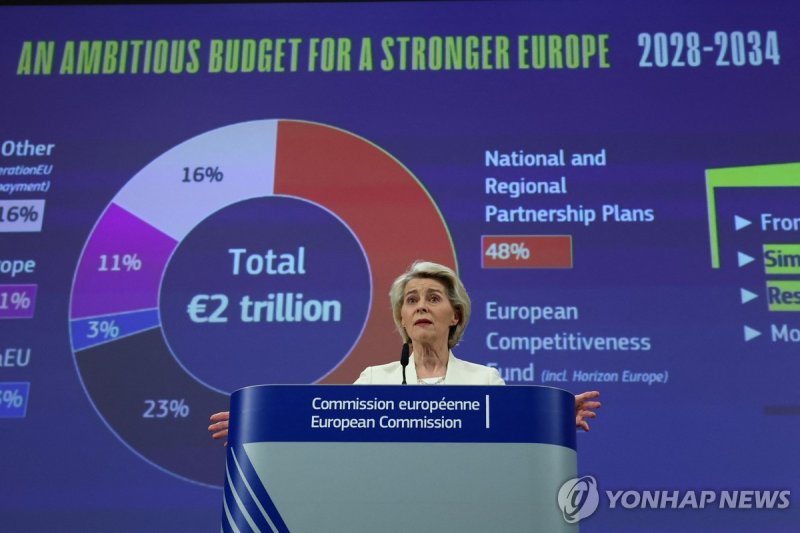
The total EU budget amounts to 2 trillion euros (approximately 3,230 trillion won), a significant increase compared to the 1.21 trillion euros approved in the summer of 2020.
Budget allocations are focused on three areas: △865 billion euros for agriculture, fisheries, regional development, and social policy △410 billion euros for competitiveness, including research and technological innovation △200 billion euros for external activities, including 100 billion euros related to the reconstruction of Ukraine.
The majority of the EU's budget resources come from direct contributions from member states.
june@fnnews.com Lee Seok-woo Reporter