Convenience Store Owner "Works 14 Hours a Day, More Than Part-Timers".. Aftermath of Minimum Wage Increase [Report]
- Input
- 2025-07-14 17:34:27
- Updated
- 2025-07-14 17:34:27
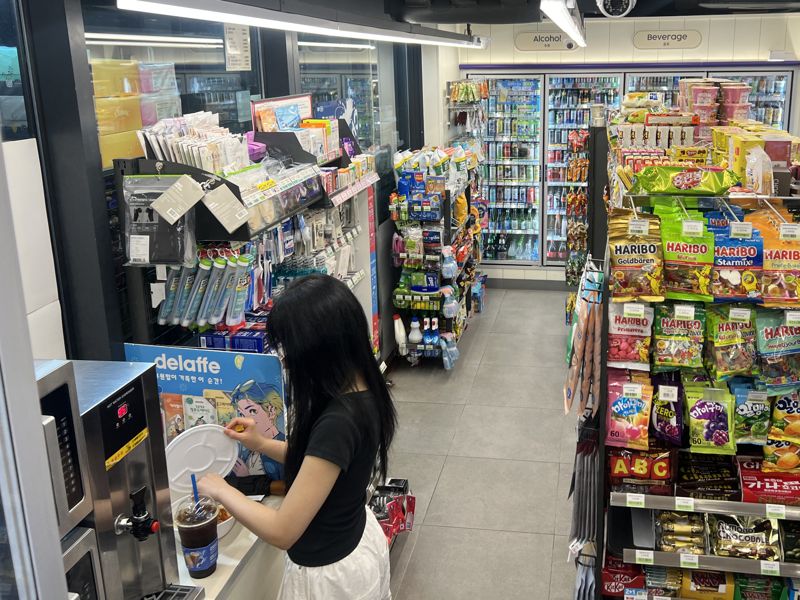
[Financial News] "The burden of labor costs is so great that I work 14 hours a day myself. Physically, I'm at my limit and can't increase working hours any further, but with the wage burden increasing, I'm contemplating whether to close the convenience store."
On the 14th, Mr. A, a store owner met at a convenience store in Gangnam, Seoul, said, "I thought the convenience store margin would have increased as much as prices have risen, but due to the economic recession and cost increases, profits have actually decreased," he lamented.
Currently operating the convenience store with four part-timers, he works longer hours than the part-timers. The legal maximum working hours in our country is 40 hours a week (8 hours a day), but he works 14 hours every day without holidays. There is no Labor Standards Act for store owners.
With the recent increase in the number of convenience stores, competition has intensified and profitability has decreased, leading to self-deprecating complaints among convenience store owners that "it's better to be a part-timer than a store owner."
In fact, as of the first quarter of this year, the operating profit of the convenience store industry has decreased by up to 40%. In addition, 68 convenience stores nationwide closed by March this year, reducing the number of stores to 54,785.
This is the first year since convenience store operations began in 1988 that the number of stores has decreased. A convenience store industry official said, "During the growth period of convenience stores, there were cases where one owner operated multiple stores or even seven stores," adding, "Recently, as the profitability of convenience stores has deteriorated, multi-store owners seem to be reducing the number of stores."
The government recently decided to raise next year's minimum wage by 2.9% to 10,320 won. This is the second lowest increase rate in history, following 2020 (1.5%). However, as the minimum wage accumulates every year, the burden on the convenience store industry, which expected a freeze in the minimum wage this year, is increasing.
A convenience store industry official said, "In the context of consumer recession, the convenience store business, where the proportion of fixed costs to sales is high, is in a situation where the burden of labor costs on convenience store owners is significant," adding, "It is regrettable that discussions on differentiated minimum wages by industry have not been made."
Concerns are also raised about side effects such as 'splitting' working hours to reduce labor costs, and 'cutting' (reducing working hours on site compared to those specified in the employment contract).
A convenience store association official said, "If a part-timer works more than 15 hours, weekly holiday pay must be given, and in this case, the actual minimum hourly wage is at the level of 11,800 to 12,000 won," adding, "From the store owner's perspective, to reduce the burden of labor costs, they split the working hours to less than 15 hours and divide the work of one part-timer among 2 to 3 people." If the owner splits the work, from the part-timer's perspective, job stability decreases and salary also decreases.
The situation is the same in the dining industry. A dining industry official said, "Nowadays, part-timers ask for a higher minimum wage when store sales rise or during busy periods such as holidays," adding, "We also give retirement pay and holiday bonuses while watching the part-timers' reactions." He continued, "The accumulated increase in labor costs, delivery platform fees, gas and electricity price increases, and rent (monthly rent) increases are making the lives of self-employed people increasingly difficult."
localplace@fnnews.com Kim Hyeonji Lee Hwanju Reporter