LG Electronics Expands HVAC Training Infrastructure in India Significantly… Accelerating 'Local Completion System'
- Input
- 2025-07-13 12:52:05
- Updated
- 2025-07-13 12:52:05
HVAC Academy in Bengaluru, India, expands to 7 times the size of the existing facility
Operating 6 academies in India… Part of strengthening the local completion system
Plan to establish a dedicated product development organization in India within the year, currently only in Changwon, Korea
Operating 6 academies in India… Part of strengthening the local completion system
Plan to establish a dedicated product development organization in India within the year, currently only in Changwon, Korea
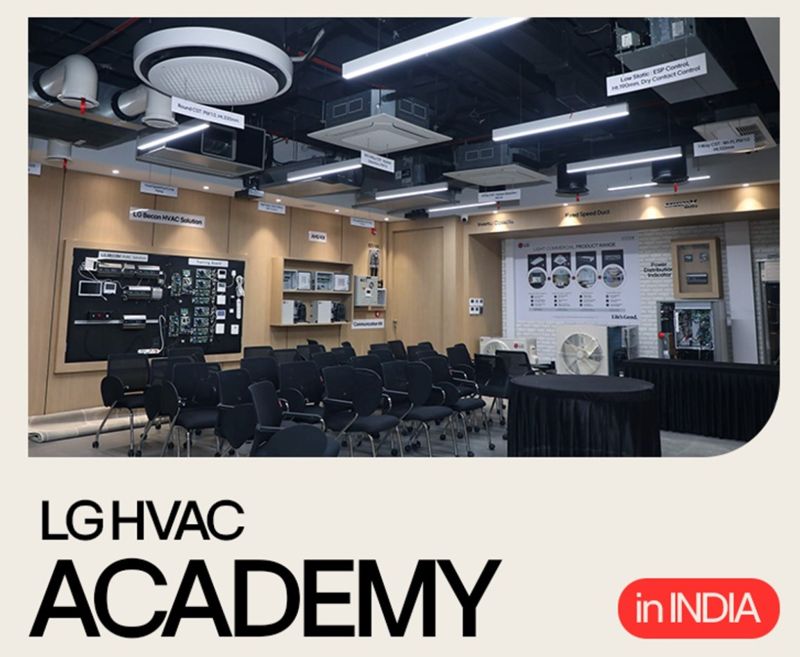
[Financial News] LG Electronics is significantly strengthening its HVAC (Heating, Ventilation, and Air Conditioning) training infrastructure in India. To capture the rapidly growing Indian air conditioning market, the company is embarking on comprehensive localization efforts, including expanding its training infrastructure. By establishing a 'completion system' that can perform all processes from design to production, sales, and maintenance locally, the strategy is to secure a competitive edge in the HVAC field, a core B2B business.
According to the industry on the 13th, LG Electronics recently relocated and expanded the HVAC Academy located in Bengaluru, India. The new academy space is 650㎡ in size, about 7 times larger than the existing facility (95㎡). Bengaluru, known as the 'Silicon Valley of India', is a key city, and LG Electronics plans to nurture this academy as a sales base specialized in B2B business, beyond just an educational facility. Additionally, various products such as commercial displays will be exhibited together to create synergy.
LG Electronics' HVAC Academy is being utilized as a global training center that strengthens comprehensive capabilities beyond simple product education, including service, sales, and design. Jae-Sung Lee, Vice President and Head of LG Electronics Eco-Solution (ES) Business Division, recently emphasized at a press conference, "The HVAC business itself is not just about supplying products but also requires engineering capabilities to install products, maintain them, and design the cooling load required by each building," adding, "We are continuously expanding global HVAC academies as part of strengthening the local completion system."
Currently, LG Electronics operates HVAC academies in six cities in India: Noida, Pune, Bengaluru, Mumbai, Chennai, and Kolkata. This is the highest number for a single country globally. Globally, the company has established academies in 65 locations across 43 countries and plans to expand to 70 locations by the end of the year.
In addition to expanding the training infrastructure, LG Electronics plans to strengthen localization in product development. The company intends to establish a dedicated HVAC product development organization in India within the year, which has so far only been in Changwon, Korea, to focus on developing products tailored to customers in India and neighboring countries.
The reason LG Electronics is focusing on India is due to the high growth potential of the market. The air conditioner penetration rate in India is still only about 10%, but rapid growth in the air conditioning market is expected, driven by economic growth and increased national income. To capture this market, LG Electronics is building comprehensive infrastructure from design to production, education, and sales through a 'local completion' system.
In particular, the HVAC business is a core pillar of LG Electronics' B2B portfolio, and the company plans to increase the proportion of total B2B sales from 35% last year to 45% by 2030. To this end, the HVAC business was separated from the existing business division at the end of last year and elevated to an independent business organization, the ES Business Division.
Meanwhile, LG Electronics began construction of its third home appliance factory in Sri City, Andhra Pradesh, India, last May. Once completed, the annual air conditioner production capacity in India is expected to expand to 4.7 million units. soup@fnnews.com Soo-Bin Lim, Jun-Seok Kim