Rice Price Surge Due to 5-Tier Distribution Structure Centered on Nonghyup: Proposal from Don Quijote CEO
- Input
- 2025-05-29 13:04:08
- Updated
- 2025-05-29 13:04:08
Yoshida, CEO of PPIH, owner of the famous discount store Don Quijote, submits a proposal to the government urging distribution reform
"The 5-tier wholesale structure is the core of rice price increase and supply instability" raises issues
Government's reserved rice supply by private contract starts today, to be displayed in stores from early next month
"The 5-tier wholesale structure is the core of rice price increase and supply instability" raises issues
Government's reserved rice supply by private contract starts today, to be displayed in stores from early next month
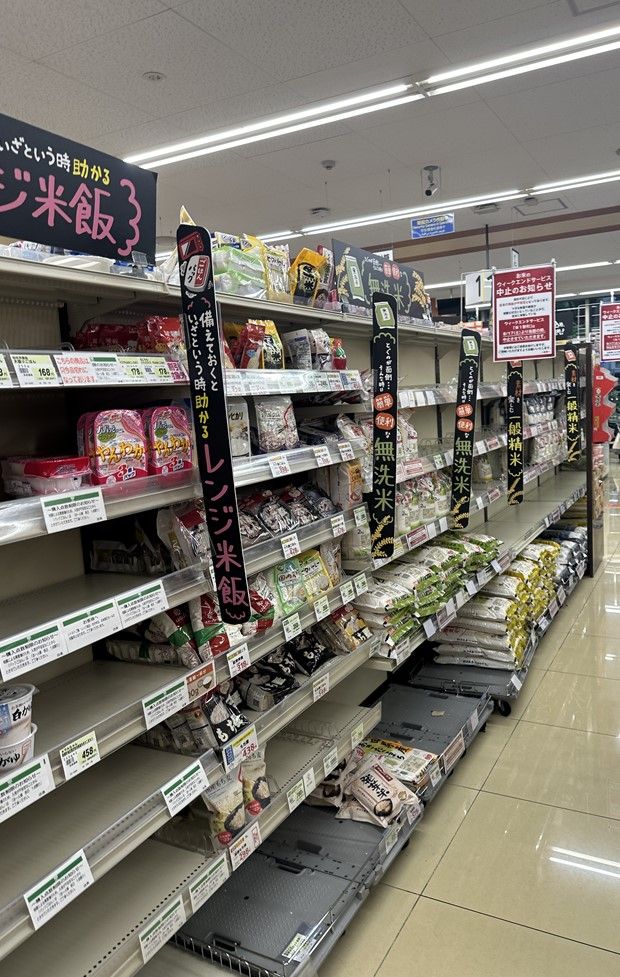
【Tokyo=Kim Kyung-min, correspondent】 Pan Pacific International Holdings (PPIH), which operates Japan's representative discount chain 'Don Quijote', has submitted an official proposal to the government urging reform of the rice distribution structure. The claim is that the complex distribution network and the closed structure centered on the National Federation of Agricultural Cooperative Associations (JA) are the main causes of the rise in rice prices. The Japanese government is also expanding the supply of reserved rice to small and medium-sized enterprises in line with this.
According to Nihon Keizai Shimbun (Nikkei) on the 29th, PPIH submitted a proposal in the name of CEO Yoshida Naoki the previous day, requesting the Minister of Agriculture, Forestry, and Fisheries to reform the distribution structure so that retailers can trade directly with JA.
CEO Yoshida pointed out the closed nature of the current distribution structure, saying, "The primary wholesalers who trade directly with JA are virtually fixed in the form of designated special agents, making new entry difficult." He also emphasized, "The multi-layered wholesale structure, which extends up to five tiers, induces intermediate margins at each stage, driving up consumer prices."
CEO Yoshida proposed, "Retailers should be institutionalized to negotiate directly with agricultural cooperatives and wholesalers," and suggested, "It is also necessary to introduce a reporting and licensing system for rice storage facilities or sales volumes to prevent hoarding."
Accordingly, the Japanese government is also overhauling the reserved rice supply system. It started selling to large distribution companies by private contract from today and will resume accepting applications from small retailers such as local supermarkets or rice shops from the 30th.
The reserved rice supplied this time is from the 2021 harvest, and the plan is to limit the application quantity per company so that more stores can handle it. The Ministry of Agriculture, Forestry, and Fisheries held an online briefing for small businesses the previous day to guide the specific supply methods and conditions.
The government has already received applications from about 70 companies by the 27th. Of these, 61 applications have been accepted, and contracts are underway. However, many of the small retailers eligible are often at a disadvantage compared to large companies in terms of logistics infrastructure or milling capacity, so it is uncertain whether reserved rice will be quickly supplied to stores and whether the price stabilization effect will actually appear.
In this regard, Shinjiro Koizumi, Minister of Agriculture, Forestry, and Fisheries, recently met with Hiromasa Nakano, Minister of Land, Infrastructure, Transport, and Tourism, to request cooperation for the smooth transportation of reserved rice. Minister Nakano replied, "I will cooperate as much as possible," and plans to request cooperation from the logistics industry and warehouse companies at the Ministry of Land, Infrastructure, Transport, and Tourism level.
PPIH secured 15,000 tons through the government's reserved rice private contract. Some stores in Tokyo are expected to start selling at a level of 2,000 yen per 5kg (about 19,000 won) as early as next week.
Meanwhile, the average price of 5kg of Japanese rice sold in supermarkets last week jumped to 4,285 yen, doubling in a year. This is the highest since related statistics were compiled.
km@fnnews.com Kim Kyung-min, reporter