Koramco "Recovery Trend in Commercial Real Estate... Bright Outlook for Hotel Market"
- Input
- 2025-05-29 13:50:01
- Updated
- 2025-05-29 13:50:01
2nd Quarter Commercial Real Estate Outlook
'Changing Market, Solid Recovery Resilience'
"Rental Housing Products Emerging as New Investment Destinations"
'Changing Market, Solid Recovery Resilience'
"Rental Housing Products Emerging as New Investment Destinations"
On the 29th, Koramco Asset Management R&S Office published the 2025 quarterly commercial real estate market outlook report 'Solid Recovery Resilience in a Changing Market Environment' and presented market trend analysis and forecasts for major assets.
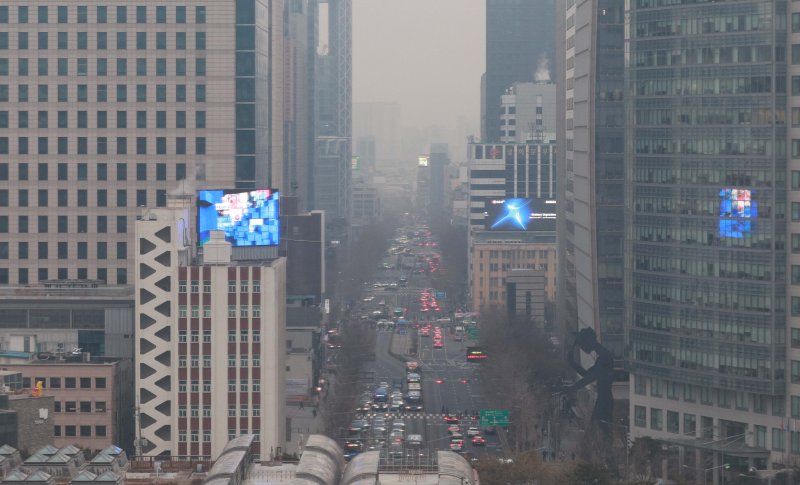
In the office market, a large-scale pre-purchase transaction of large offices in Magok worth about 2.9 trillion won was made in the first quarter, recording a total transaction volume of 6 trillion won, an increase of about 122% compared to the same period last year. However, the large-scale supply expansion led to an increase in the overall office vacancy rate, with the vacancy rate in Seoul's business district rising by 2.3%p compared to the previous quarter, reaching 7.2%. As a result, the actual rental growth rate also recorded 0%, indicating a clear slowdown in rental growth. Small and medium-sized offices also maintain a high level of vacancy rate.
However, as many office development projects are delayed in construction, new supply is expected to be limited until 2027. Accordingly, continuous growth of emerging business districts such as Pangyo, Magok, and Seongsu is predicted.
The logistics center market is showing a full-fledged recovery trend, with transaction volume increasing by 70% to 1.4 trillion won compared to the same period last year. In particular, transactions are resuming, centered on newly built large assets in the metropolitan area, and 8 out of 9 transaction cases were complex and ambient assets. In addition, the supply area of new logistics centers in the first quarter was only about 40,000 pyeong, a decrease of 84% compared to the same period last year. It was analyzed that new permits are also turning to a decreasing trend, and supply is rapidly declining.
The outlook for the hotel market is bright. With the increase in foreign tourists visiting Korea from China, Japan, Taiwan, the United States, etc., the stable operating performance centered on Seoul is expected to continue to improve. In addition, the entry of global luxury brands such as Mercure Hotel, Ambassador Pullman, and Rosewood into the domestic market is planned, raising expectations for an improvement in the quality level of hotel assets. Attempts to remodel existing retail facilities or office buildings into hotels to maximize profitability are also emerging, further proving the expectations for the hotel market.
The data center market is expected to grow in the mid to long term due to the growth of the AI industry and the expansion of global cloud operators into the domestic market. In particular, although asset management companies and global data center operators are competitively promoting data center development, the lack of developable sites in key areas and difficulties in securing power are expected to further highlight the scarcity of assets in the metropolitan area. According to the report, about 23 new data centers are expected to be supplied in the metropolitan area, including southwestern Seoul, Incheon, Goyang, and Yongin, by 2027.
Rental housing products are emerging as new investment destinations as the interest rate cut trend and government loan regulations are linked to an increase in monthly rent demand and landlords' preference for monthly rent expands. Recent investments by foreign investors in domestic rental housing products reflect this market situation, and as the conversion of jeonse to monthly rent accelerates, rental prices are also rising, solidifying a stable income base. In addition, the regulatory trend of lifestyle accommodation facilities and the activation of residential REITs are also analyzed to have a positive impact on the rental housing product market.
Kim Yeol-mae, head of Koramco Asset Management R&S Office, said, "The 2nd quarter commercial real estate market is a time to adjust strategies according to changes in mid to long-term profitability and investment conditions rather than short-term demand," adding, "Understanding and selective approach to structural changes in major sectors such as offices, logistics, hotels, and data centers are important."
Meanwhile, Koramco recently declared 'Vision 2030', emphasizing an investor-centered management philosophy and promoting changes in overall management, such as organizational restructuring to enhance professionalism and efficiency. In the future, through quarterly market reports, they plan to continuously analyze changes in asset groups and market outlook to provide practical insights for investors to make more rational decisions.
ming@fnnews.com Jeon Min-gyeong Reporter