[Ma Donghun's Dangerous Thoughts] There is No 'Spirit of the Times' in the Presidential Election
- Input
- 2025-05-27 18:31:01
- Updated
- 2025-05-27 18:31:01
Unable to Present National Direction
Only Pouring Out Contextless Pledges
Media Should Take the Lead in Raising Issues
Only Pouring Out Contextless Pledges
Media Should Take the Lead in Raising Issues
The level of public knowledge of the constitution and laws has greatly increased. They have also learned what hotel economics and the Keynesian multiplier effect are. However, the purpose of the high-cost presidential election is not to enlighten the public's legal and economic common sense. It is very regrettable that the landscape of the final stage of the presidential election includes issues such as the responsibility for martial law and impeachment, the debate over immunity regarding candidates' criminal responsibility, legislative dictatorship and judicial interference, sweet temptations in the name of public welfare and economic stability, and rampant falsehoods and slander.
No candidate talks about the 'spirit of the times' in this presidential election. They are only focused on calculating votes in front of them, neglecting the prophetic grand discourse that coldly illuminates the present of the nation and reflectively looks at the future. Election engineering is for the candidate's today, and political philosophy is for the people's tomorrow. Still, 8 years ago, the presidential election had the spirit of overcoming economic polarization, and 3 years ago, it had fairness as its spirit of the times. But this time, it is missing.
They might excuse the lack of preparation due to the sudden presidential election caused by the impeachment. While it might be understandable for the People Power Party, which went through the candidate selection process until the last minute, it is very regrettable that the Democratic Party candidate, who has been preparing since the last election, cannot present a striking national vision and spirit of the times other than the complete overcoming of the political boon of rebellion. If it is due to a lack of thought, it is a result of incompetence, and if it is a strategic reservation, it is a neglect of responsibility.
A national leader needs a cross-editing storytelling of 'zoom-in' and 'zoom-out'. A 'close-up' shot that zooms in on urgent national tasks in detail is necessary, but a 'wide established' shot that shows the flow of the times in a big context is also needed. A series of close-ups without context setting will cause another chaos by failing to present the national direction after the presidential election. As the direction of national affairs after the presidential election is as important as the result of the election itself, a national vision and spirit of the times shown through a wide established shot are absolutely necessary.
A typical example of thoughtlessly pouring out close-up shots is the candidates' pledges on university innovation that will lead the nation's future. Candidate Lee Jaemyung says he will create 10 Seoul National Universities to resolve regional disparities. Candidate Kim Moonsu says he will solve the problem of educational inequality through credit exchange between Seoul National University and local national universities. However, there is no wide established shot on how these pledges are related to the competitiveness of universities in the era of global infinite competition, and what the roles of the government, universities, and professors are. It is frustrating that there is no wide established shot on whether they believe that such fragmentary prescriptions can secure self-sustainability in the era of global science and technology wars, whether they intend to leave the research and educational functions of private universities, which account for about 80% of all universities, to market competition principles, and how the current government regulations should be innovated. It is also very regrettable that there are only fragmentary pledges that are difficult to understand in terms of context regarding low birthrate and aging society, climate and energy, pensions, medical care, and real estate issues.
If presidential candidates do not talk about the spirit of the times, it is the media's responsibility. If the media is too busy chasing after the selective close-up shots that candidates throw without rest and neglects its prophetic role of presenting the spirit of the times, there is no hope for the people. We must start another 5-year wasteful voyage without knowing where the destination is.
Currently, political parties and candidates remain at the level of political strife relying on shallow political intelligence. The most serious problem facing our politics is that it is difficult to expect a political discourse of intellectuality that overwhelms political intelligence, that is, the declaration of the spirit of the times. If candidates do not do it, or if it is difficult to expect because it is beyond their capabilities, the media must boldly raise the issue. The presidential election should be one that allows the people to cross the valley of uncertainty and look at the future beyond the river.
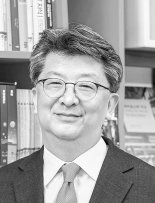
Ma Donghun, Korea University Media College Professor